Sujet résolu
L'auteur a trouvé une solution à son problème.



0 viols commis dans la Wehrmacht le diffamateur

Et oui c'est nous les gentils
À chaque fois que vous clignez des yeux, 15 000 étoiles naissent, 300 explosent et 30 trous noirs se forment

il y a 3 ans
Sponsorisé
Connectez-vous pour masquer les pubs


L'offensive débute le 5 aout comme prévu au nord ouest de Bielgorod avec une préparation d'artillerie pour commencer à affaiblir la première ligne de défense allemande. L'allongement des tirs constituent le signal de l'assaut de l'infanterie soviétique. Plusieurs kilomètres sont effectués au cours de la percée venue des 5ème et 6ème Armées de la Garde, ainsi que de la 53ème Armée. La 6ème Armée de la Garde détruit la 167 ème division d'infanterie allemande. Les éléments de pointe des 2 Armées de tanks sont introduits aussitôt, à savoir les 1ère et 5ème Garde. L'avancée est telle qu'en même pas 1 journée l'avancée est de plus de 25 kilomètres. Ce qui entraîne la rupture de la voie ferrée reliant Bielgorod et Tomarovka.
Si Manstein s'attendait à une attaque, il ne pouvait pas prévoir qu'elle serait aussi forte à cause du fait que nombre de ces unités avait déjà été fortement abimes plusieurs semaines auparavant à Koursk. Malgré l'embarquement dans des trains de Totenkpof et de Das Reich, la 4ème Armée Panzer, en attendant leur arrivée, est obligée de lutter seule de son côté. Si le Front de Voronej se comporte parfaitement, le Front de la Steppe a un peu plus de mal à franchir le Donetz au sud et à l'est de Bielgorod. De telle sorte qu'il faudra attendre le 8 aout pour que le XIème Corps allemand, dirigé par Raus, constitué des 320ème, 106ème et 168ème divisions, reculent de leur position. Ainsi, de 42 955 hommes en état de se battre la veille de l'opération Citadelle le 4 juillet, elle passe à seulement plus de 16 000 après l'opération Rumiantsev à la fin du mois d'aout. Sachant que les 27 000 pertes allemandes n'ont été remplacées qu'à même pas 30%. Le 5 aout, Bielgorod est reconquise par la 89ème division de la Garde Soviétique du Front de la Steppe tout comme Orel est liberée le 5 aout également. Rien n'y fait malgré la résistance acharnée côté allemand comme on a pu le constater à Borisovka et à Graivoron avec 5 divisions d'infanterie allemande.
De plus, les attaques menées par les 27ème, 38ème et 40ème Armées font que les divisions Panzers ne peuvent que très difficilement maneuvrer. Le front est ainsi percé de 50 kilomètres à la fin de la journée du 7 aout.
Au niveau des pertes globales, si on en croit le général et historien Krivochéev, l'opération Citadelle aurait à elle seule coûté plus de 12% des effectifs engagées dans la bataille. Sachant qu'à l'extrême gauche du saillant de Koursk, les 38ème, 60ème et 65ème Armées n'ont pas été directement impliquées dans la bataille. Les pertes des unités varient allant au niveau divisionnaire de 20 à 70%. Pour un total de plus de 80% des pertes Soviétiques attribuables à la tenaille sud de Manstein. Pas trop surprenant de ce point de vue là.
Cependant, un autre historien russe, un certain Boris Sokolov a mis en cause les chiffres de Krivochéev de 1993. Dans le cadre d'un ouvrage paru en 1996 auquel d'autres auteurs ont participé, il parle d'incohérences de nombre de sources, relevant un recensement du nombre de soldats au Front du Centre de 738 000 hommes le 5 puis de 645 000 hommes le 12 juillet, ce qui parait impossible. Cela signifierait qu'il y ait eu 92 700 pertes et ce malgré le fait que Krivochéev estime les pertes à 33 897 seulement durant la même période. Pour Sokolov, les pertes s'élèvent en réalité à 317 000 au total dont 90 000 pour le Front du Centre et 227 000 pour les Front Voronej et Steppe. Difficile de savoir qui est le plus proche de la réalité étant donné la vieille habitude de l'Armée rouge à compter ses morts et ses blessés de manière chaotique tout au long de la guerre, ce qui donne en fin de compte des sources assez incohérentes. Pour Krivochéev, il y a eu 230 000 pertes subies par l'Armée rouge durant Citadelle entre le 5 et le 23 juillet. Sachant qu'en 37 jours de combat, la bataille de l'Orel a eu pour résultat la perte de 429 890 soldats au total. Soit respectivement 12 105 et 11 618 pertes pour Citadelle et Orel. Et ce malgré le fait qu'à Orel l'Armée rouge ait été à l'offensive tout en disposant de meilleurs conditions qu'à Koursk. Pour l'opération Rumiantsev, les chiffres sont de 255 566 pertes au total sur 21 jours soit 12 169 par jour.
Si Manstein s'attendait à une attaque, il ne pouvait pas prévoir qu'elle serait aussi forte à cause du fait que nombre de ces unités avait déjà été fortement abimes plusieurs semaines auparavant à Koursk. Malgré l'embarquement dans des trains de Totenkpof et de Das Reich, la 4ème Armée Panzer, en attendant leur arrivée, est obligée de lutter seule de son côté. Si le Front de Voronej se comporte parfaitement, le Front de la Steppe a un peu plus de mal à franchir le Donetz au sud et à l'est de Bielgorod. De telle sorte qu'il faudra attendre le 8 aout pour que le XIème Corps allemand, dirigé par Raus, constitué des 320ème, 106ème et 168ème divisions, reculent de leur position. Ainsi, de 42 955 hommes en état de se battre la veille de l'opération Citadelle le 4 juillet, elle passe à seulement plus de 16 000 après l'opération Rumiantsev à la fin du mois d'aout. Sachant que les 27 000 pertes allemandes n'ont été remplacées qu'à même pas 30%. Le 5 aout, Bielgorod est reconquise par la 89ème division de la Garde Soviétique du Front de la Steppe tout comme Orel est liberée le 5 aout également. Rien n'y fait malgré la résistance acharnée côté allemand comme on a pu le constater à Borisovka et à Graivoron avec 5 divisions d'infanterie allemande.
De plus, les attaques menées par les 27ème, 38ème et 40ème Armées font que les divisions Panzers ne peuvent que très difficilement maneuvrer. Le front est ainsi percé de 50 kilomètres à la fin de la journée du 7 aout.
Au niveau des pertes globales, si on en croit le général et historien Krivochéev, l'opération Citadelle aurait à elle seule coûté plus de 12% des effectifs engagées dans la bataille. Sachant qu'à l'extrême gauche du saillant de Koursk, les 38ème, 60ème et 65ème Armées n'ont pas été directement impliquées dans la bataille. Les pertes des unités varient allant au niveau divisionnaire de 20 à 70%. Pour un total de plus de 80% des pertes Soviétiques attribuables à la tenaille sud de Manstein. Pas trop surprenant de ce point de vue là.
Cependant, un autre historien russe, un certain Boris Sokolov a mis en cause les chiffres de Krivochéev de 1993. Dans le cadre d'un ouvrage paru en 1996 auquel d'autres auteurs ont participé, il parle d'incohérences de nombre de sources, relevant un recensement du nombre de soldats au Front du Centre de 738 000 hommes le 5 puis de 645 000 hommes le 12 juillet, ce qui parait impossible. Cela signifierait qu'il y ait eu 92 700 pertes et ce malgré le fait que Krivochéev estime les pertes à 33 897 seulement durant la même période. Pour Sokolov, les pertes s'élèvent en réalité à 317 000 au total dont 90 000 pour le Front du Centre et 227 000 pour les Front Voronej et Steppe. Difficile de savoir qui est le plus proche de la réalité étant donné la vieille habitude de l'Armée rouge à compter ses morts et ses blessés de manière chaotique tout au long de la guerre, ce qui donne en fin de compte des sources assez incohérentes. Pour Krivochéev, il y a eu 230 000 pertes subies par l'Armée rouge durant Citadelle entre le 5 et le 23 juillet. Sachant qu'en 37 jours de combat, la bataille de l'Orel a eu pour résultat la perte de 429 890 soldats au total. Soit respectivement 12 105 et 11 618 pertes pour Citadelle et Orel. Et ce malgré le fait qu'à Orel l'Armée rouge ait été à l'offensive tout en disposant de meilleurs conditions qu'à Koursk. Pour l'opération Rumiantsev, les chiffres sont de 255 566 pertes au total sur 21 jours soit 12 169 par jour.
Batman sera toujours là pour faire régner la justice sur les topics de onche.
il y a 3 ans
Au niveau des pertes globales, si on en croit le général et historien Krivochéev, l'opération Citadelle aurait à elle seule coûté plus de 12% des effectifs engagées dans la bataille. Sachant qu'à l'extrême gauche du saillant de Koursk, les 38ème, 60ème et 65ème Armées n'ont pas été directement impliquées dans la bataille. Les pertes des unités varient allant au niveau divisionnaire de 20 à 70%. Pour un total de plus de 80% des pertes Soviétiques attribuables à la tenaille sud de Manstein. Pas trop surprenant de ce point de vue là. Cependant, un autre historien russe, un certain Boris Sokolov a mis en cause les chiffres de Krivochéev de 1993. Dans le cadre d'un ouvrage paru en 1996 auquel d'autres auteurs ont participé, il parle d'incohérences de nombre de sources, relevant un recensement du nombre de soldats au Front du Centre de 738 000 hommes le 5 puis de 645 000 hommes le 12 juillet, ce qui parait impossible. Cela signifierait qu'il y ait eu 92 700 pertes et ce malgré le fait que Krivochéev estime les pertes à 33 897 seulement durant la même période. Pour Sokolov, les pertes s'élèvent en réalité à 317 000 au total dont 90 000 pour le Front du Centre et 227 000 pour les Front Voronej et Steppe. Difficile de savoir qui est le plus proche de la réalité étant donné la vieille habitude de l'Armée rouge à compter ses morts et ses blessés de manière chaotique tout au long de la guerre, ce qui donne en fin de compte des sources assez incohérentes. Pour Krivochéev, il y a eu 230 000 pertes subies par l'Armée rouge durant Citadelle entre le 5 et le 23 juillet. Sachant qu'en 37 jours de combat, la bataille de l'Orel a eu pour résultat la perte de 429 890 soldats au total. Soit respectivement 12 105 et 11 618 pertes pour Citadelle et Orel. Et ce malgré le fait qu'à Orel l'Armée rouge ait été à l'offensive tout en disposant de meilleurs conditions qu'à Koursk. Pour l'opération Rumiantsev, les chiffres sont de 255 566 pertes au total sur 21 jours soit 12 169 par jour.
Batman sera toujours là pour faire régner la justice sur les topics de onche.
il y a 3 ans







Topic de qualitay

« les promesses n'engagent que ceux qui y croient »
il y a 3 ans
En bref, c'était la première fois de la Seconde Guerre mondiale que les soviétiques réussissait à battre les Allemands en dehors des conditions hivernales. Jusque-là, les Allemands avaient dominé les batailles de l'été que ce soit en 1941 ou encore en 1942.
C'était la première fois qu'une attaque de type Blitzkrieg était repoussée. Les Allemands avaient prévu d'encercler un saillant (renflement de la ligne) pour piéger plusieurs dizaines de milliers de soldats soviétiques, ce qu'ils avaient fait à plusieurs reprises au cours des deux derniers étés avec peu ou pas de résistance. Les Soviétiques ont répliqué en préparant soigneusement le terrain que les Allemands étaient susceptibles d'attaquer pour empêcher les chars d'avancer, puis en lançant leurs forces de première ligne directement sur les deux colonnes de chars qui se formaient de chaque côté du saillant. Là où auparavant les Allemands n'avaient aucun problème à avancer de miles et km en une journée, ils avaient maintenant du mal à avancer de quelques yards ou mètres.
C'était la première fois que les Allemands utilisaient leur nouveau super-char, le Panzer, qui était à peu près un canon anti-aérien sur roues. Il pouvait facilement abattre une cible à 2 km, se déplacer incroyablement rapidement sur un terrain plat et était pratiquement invulnérable aux tirs ennemis. En revanche, il était difficile à produire et avait une maniabilité limitée en raison de sa taille et de son poids. A Koursk, le terrain n'était pas à son goût, il était entouré de cibles plus rapprochées et avait du mal à sortir d'une zone restreinte. C'était un match pour n'importe quel char mais avait une efficacité limitée sur un champ de bataille en constante évolution avec des chars plus petits se déplaçant rapidement.
C'était la première fois qu'une attaque de type Blitzkrieg était repoussée. Les Allemands avaient prévu d'encercler un saillant (renflement de la ligne) pour piéger plusieurs dizaines de milliers de soldats soviétiques, ce qu'ils avaient fait à plusieurs reprises au cours des deux derniers étés avec peu ou pas de résistance. Les Soviétiques ont répliqué en préparant soigneusement le terrain que les Allemands étaient susceptibles d'attaquer pour empêcher les chars d'avancer, puis en lançant leurs forces de première ligne directement sur les deux colonnes de chars qui se formaient de chaque côté du saillant. Là où auparavant les Allemands n'avaient aucun problème à avancer de miles et km en une journée, ils avaient maintenant du mal à avancer de quelques yards ou mètres.
C'était la première fois que les Allemands utilisaient leur nouveau super-char, le Panzer, qui était à peu près un canon anti-aérien sur roues. Il pouvait facilement abattre une cible à 2 km, se déplacer incroyablement rapidement sur un terrain plat et était pratiquement invulnérable aux tirs ennemis. En revanche, il était difficile à produire et avait une maniabilité limitée en raison de sa taille et de son poids. A Koursk, le terrain n'était pas à son goût, il était entouré de cibles plus rapprochées et avait du mal à sortir d'une zone restreinte. C'était un match pour n'importe quel char mais avait une efficacité limitée sur un champ de bataille en constante évolution avec des chars plus petits se déplaçant rapidement.
Batman sera toujours là pour faire régner la justice sur les topics de onche.
il y a 3 ans
En conclusion, les Soviétiques ont gagné, pas artistiquement et pas économiquement, mais assez solidement, et ce malgré des pertes plus importantes en hommes et en matériels.
La bataille s'est déroulée autour de trois villes réparties le long d'une ligne ferroviaire nord-sud dans le centre de la Russie et le nord de l'Ukraine : du nord au sud, Orel, Koursk et Kharkov.
A la fin de la campagne d'hiver 1942/1943, les Allemands tiennent Orel et un saillant N, E et S de celui-ci. Les Soviétiques tenaient Koursk et un saillant faisant saillie au N, à l'O et au S de celui-ci.
Les Allemands tenaient Kharkov, et un saillant faisant saillie de celui-ci se terminant à Belgorod. La chose évidente sur la carte était que les Allemands attaquent au sud d'Orel et au nord de Belgorod et prennent Koursk et coupent les Soviétiques défendant ce saillant, en supposant, bien sûr, que les Soviétiques ne soient pas trop nombreux. [Ils étaient].
La chose évidente du point de vue soviétique était de préparer la défense du saillant de Koursk en profondeur et de poster des réserves suffisantes pour faire face à toute pénétration allemande, la contre-attaquer, et si les Allemands n'étaient pas trop bons dans la guerre des chars mobiles, détruire la pénétration. [Ils étaient trop bons pour permettre ce rêve chimérique trop ambitieux de détruire la pénétration d'un seul coup].
Pour les Soviétiques, au cours de la bataille, les choses allaient et venaient. Ils ont eu une bonne première semaine dans le nord, où les forces de Rokossovsky ont bourré l'attaque allemande presque à la ligne de mêlée et leur propre offensive contre la face nord du saillant d'Orel a gagné du terrain. Leur pire journée était assez bonne : la charge de chars du 12 juillet à Prokhorovka, qui dans la propagande soviétique était un engagement de réunion culminant qui a condamné les Panzers, était en fait un faux visage. Les chars soviétiques ont chargé une force de chars SS allemande qui était prête et attendait derrière un fossé antichar que les Soviétiques eux-mêmes avaient construit, mais la force de chars chargée de la mission d'attaque n'en avait pas entendu parler. Les Soviétiques ont perdu 300 chars en tuant seulement une douzaine ou deux chars allemands. Mais même cela suffisait.
La doublure argentée du fiasco était que les Allemands avaient l'intention de s'attaquer ce jour-là et de prendre Prokhorovka, puis de remonter vers Oboyan (porte sud de Koursk). C'était une ambition irréaliste et char ou pas, ils n'allaient pas pouvoir le faire. Mais en l'occurrence, l'infanterie soviétique et les réserves antichars ont eu le temps d'atteindre ce village et d'y préparer les défenses. Le lendemain, si les Allemands avaient tenté d'avancer sur le village, la défense aurait été prête.
Les Allemands, décontenancés par l'ampleur des attaques soviétiques du 12 juillet, décidèrent assez judicieusement de r s'adapter et de tenter quelque chose qui était en fait dans leurs moyens avec un peu de chance et avec suffisamment d'erreurs tactiques soviétiques : enfermer le 69ème armée soviétique entre le 2nd corps Panzer SS et le détachement d'armée Kempf, qui opérait dans la même zone.
Cela signifiait oublier Koursk. L'attaque à la pince nord du saillant d'Orel avait complètement échoué et était alors mise en danger par une attaque soviétique du nord d'Orel qui arrivait derrière le flanc nord allemand. La pince du sud, dont les efforts allaient être dénués de sens puisque les deux pinces devaient gagner pour que le plan de Koursk fonctionne, s'est tournée vers la tâche de tuer la 69e armée soviétique.
Si cela avait entièrement réussi, cela aurait donné aux Allemands un modeste prix de consolation pour l'échec de leurs plus grandes ambitions. En l'occurrence, environ la moitié de la 69e armée s'est enfuie et les combats n'étaient pas déséquilibrés en faveur des Allemands. Le but de toute l'opération de Koursk était que les Allemands perdaient leur saillant d'Orel et voyaient l'avantage de leurs blindés diminuer. En termes de forces perdues, les Allemands ont perdu moins et pouvaient compter un coup d'État si vous voulez, mais les Soviétiques pouvaient se permettre leurs propres pertes et après Koursk, ils avaient l'initiative. À la mi-août, ils avaient obtenu Orel et étaient en bonne voie pour prendre Kharkov.
La bataille s'est déroulée autour de trois villes réparties le long d'une ligne ferroviaire nord-sud dans le centre de la Russie et le nord de l'Ukraine : du nord au sud, Orel, Koursk et Kharkov.
A la fin de la campagne d'hiver 1942/1943, les Allemands tiennent Orel et un saillant N, E et S de celui-ci. Les Soviétiques tenaient Koursk et un saillant faisant saillie au N, à l'O et au S de celui-ci.
Les Allemands tenaient Kharkov, et un saillant faisant saillie de celui-ci se terminant à Belgorod. La chose évidente sur la carte était que les Allemands attaquent au sud d'Orel et au nord de Belgorod et prennent Koursk et coupent les Soviétiques défendant ce saillant, en supposant, bien sûr, que les Soviétiques ne soient pas trop nombreux. [Ils étaient].
La chose évidente du point de vue soviétique était de préparer la défense du saillant de Koursk en profondeur et de poster des réserves suffisantes pour faire face à toute pénétration allemande, la contre-attaquer, et si les Allemands n'étaient pas trop bons dans la guerre des chars mobiles, détruire la pénétration. [Ils étaient trop bons pour permettre ce rêve chimérique trop ambitieux de détruire la pénétration d'un seul coup].
Pour les Soviétiques, au cours de la bataille, les choses allaient et venaient. Ils ont eu une bonne première semaine dans le nord, où les forces de Rokossovsky ont bourré l'attaque allemande presque à la ligne de mêlée et leur propre offensive contre la face nord du saillant d'Orel a gagné du terrain. Leur pire journée était assez bonne : la charge de chars du 12 juillet à Prokhorovka, qui dans la propagande soviétique était un engagement de réunion culminant qui a condamné les Panzers, était en fait un faux visage. Les chars soviétiques ont chargé une force de chars SS allemande qui était prête et attendait derrière un fossé antichar que les Soviétiques eux-mêmes avaient construit, mais la force de chars chargée de la mission d'attaque n'en avait pas entendu parler. Les Soviétiques ont perdu 300 chars en tuant seulement une douzaine ou deux chars allemands. Mais même cela suffisait.
La doublure argentée du fiasco était que les Allemands avaient l'intention de s'attaquer ce jour-là et de prendre Prokhorovka, puis de remonter vers Oboyan (porte sud de Koursk). C'était une ambition irréaliste et char ou pas, ils n'allaient pas pouvoir le faire. Mais en l'occurrence, l'infanterie soviétique et les réserves antichars ont eu le temps d'atteindre ce village et d'y préparer les défenses. Le lendemain, si les Allemands avaient tenté d'avancer sur le village, la défense aurait été prête.
Les Allemands, décontenancés par l'ampleur des attaques soviétiques du 12 juillet, décidèrent assez judicieusement de r s'adapter et de tenter quelque chose qui était en fait dans leurs moyens avec un peu de chance et avec suffisamment d'erreurs tactiques soviétiques : enfermer le 69ème armée soviétique entre le 2nd corps Panzer SS et le détachement d'armée Kempf, qui opérait dans la même zone.
Cela signifiait oublier Koursk. L'attaque à la pince nord du saillant d'Orel avait complètement échoué et était alors mise en danger par une attaque soviétique du nord d'Orel qui arrivait derrière le flanc nord allemand. La pince du sud, dont les efforts allaient être dénués de sens puisque les deux pinces devaient gagner pour que le plan de Koursk fonctionne, s'est tournée vers la tâche de tuer la 69e armée soviétique.
Si cela avait entièrement réussi, cela aurait donné aux Allemands un modeste prix de consolation pour l'échec de leurs plus grandes ambitions. En l'occurrence, environ la moitié de la 69e armée s'est enfuie et les combats n'étaient pas déséquilibrés en faveur des Allemands. Le but de toute l'opération de Koursk était que les Allemands perdaient leur saillant d'Orel et voyaient l'avantage de leurs blindés diminuer. En termes de forces perdues, les Allemands ont perdu moins et pouvaient compter un coup d'État si vous voulez, mais les Soviétiques pouvaient se permettre leurs propres pertes et après Koursk, ils avaient l'initiative. À la mi-août, ils avaient obtenu Orel et étaient en bonne voie pour prendre Kharkov.
Batman sera toujours là pour faire régner la justice sur les topics de onche.
il y a 3 ans
Quant à la question de savoir si l'Armée rouge était devenue supérieure à la Wehrmacht à partir de l'année 1943, la réponse est oui, en nombre, puisque l'armée rouge était plus nombreuse que l'armée allemande dans un rapport de 2/1 en février 1943. La Russie avait quelque 6 millions de soldats rassemblés sur le front de bataille contre seulement 3 millions d'Allemands. Les Russes ont toujours eu une division blindée supérieure ayant quelque 22000 chars par rapport à une volaille 3000 chars allemands principalement Panzer mk III qui était inférieur au T - 34 et KV -1 le seul domaine où les Allemands avaient un net avantage était avec leur avion de chasse ayant l'utilisation du ME 109 et du FW 190, JU - 87 & 88, et une bonne efficacité allemande à l'ancienne qui était l'une des raisons pour lesquelles l'infanterie allemande a pu avancer malgré la rencontre de chars russes supérieurs. Aucune des armes antichars actuelles ne fonctionnait sur le T - 34 ou le KV-1. Pour lutter contre cela, le Panzergrenadier allemand essaierait d'attirer les chars russes dans une embuscade où ils pourraient tirer à bout portant sur les chars par les côtés et l'arrière. à des distances inférieures à 50 m, en désespoir de cause, les Allemands ont eu recours au canon antiaérien de 88 mm.
Oui, en conclusion, l'armée rouge était supérieure à l'armée allemande en nombre, la seule raison pour laquelle ils ont été forcés de battre en retraite au début de la Grande Guerre patriotique était due à une combinaison de surprise, étant très mal organisée, manquant d'un approvisionnement adéquat en munitions , et une rupture de la structure de commandement due aux purges de Staline dans les années 1930.
Oui, en conclusion, l'armée rouge était supérieure à l'armée allemande en nombre, la seule raison pour laquelle ils ont été forcés de battre en retraite au début de la Grande Guerre patriotique était due à une combinaison de surprise, étant très mal organisée, manquant d'un approvisionnement adéquat en munitions , et une rupture de la structure de commandement due aux purges de Staline dans les années 1930.
Batman sera toujours là pour faire régner la justice sur les topics de onche.
il y a 3 ans
Je lirai ça un jour, peut-être

C'est vrai que ça risque d'être un peu long.
Batman sera toujours là pour faire régner la justice sur les topics de onche.
il y a 3 ans
Pour ce qui est de mes sources dans leur ensemble voici
"Koursk, les 40 jours qui ont ruiné la Wehrmacht"
Ecrit par Jean Lopez, le plus grand spécialiste français du front de l'est et du conflit germano soviétique.
"L'armée d'Hitler. La Wehrmacht, les nazis et la guerre"
écrit par Bartov Omer, professeur américain d'histoire contemporaine
"Kursk, the Air Battle : July 1943"
Ecrit par Bergstrom Christer, spécialiste suédois des campagnes aériennes sur le front de l'est
"Vor 60 Jahre, Prochorowka
Ecrit par Brand Dieter, général de la Bundeswehr en retraite.
" La guerre à l'est "
Ecrit par Clark Allan,
"The road to Berlin, Stalin's war in Germany" volume 2
Ecrit par John Erickson, historien militaire britannique
"The Battle of Kursk"
Ecrit par David Glantz et Johnattan House,
"Opération terre brûlée. De la Volga à la Vistule. Décembre 1942 aout 1944"
Ecrit par Carell Paul
"Koursk, le choc des blindés"
Ecrit par Jukes Geoffrey
"Das Gesetz des Handelns, die Operation Zitadelle, 1943"
Ecrit par Klink Ernst
"Die Offensive gegen Kursk, 1943, Legende, Mythen und Propaganda".
Ecrit par Roman Toppel, historien allemand
"Kursk 1943, a statistical analysis"
Ecrit par Niklas Zetterling et Anders Frankson, historiens allemands
"La Russie en guerre" les 2 volumes
Ecrit par Alexander Werth, correspondant du Sunday Time et de la BBC à Moscou
""Analyzing World War II, Easter Front Battle" Journal of Slavic Military Studies, volume 11
Ecrit là aussi par Niklas Zetterling et Anders Frankson
"Stalingrad to Berlin, The German defeat in the East"
Ecrit par Earl Ziemke, historien militaire américain
"Koursk, les 40 jours qui ont ruiné la Wehrmacht"
Ecrit par Jean Lopez, le plus grand spécialiste français du front de l'est et du conflit germano soviétique.
"L'armée d'Hitler. La Wehrmacht, les nazis et la guerre"
écrit par Bartov Omer, professeur américain d'histoire contemporaine
"Kursk, the Air Battle : July 1943"
Ecrit par Bergstrom Christer, spécialiste suédois des campagnes aériennes sur le front de l'est
"Vor 60 Jahre, Prochorowka
Ecrit par Brand Dieter, général de la Bundeswehr en retraite.
" La guerre à l'est "
Ecrit par Clark Allan,
"The road to Berlin, Stalin's war in Germany" volume 2
Ecrit par John Erickson, historien militaire britannique
"The Battle of Kursk"
Ecrit par David Glantz et Johnattan House,
"Opération terre brûlée. De la Volga à la Vistule. Décembre 1942 aout 1944"
Ecrit par Carell Paul
"Koursk, le choc des blindés"
Ecrit par Jukes Geoffrey
"Das Gesetz des Handelns, die Operation Zitadelle, 1943"
Ecrit par Klink Ernst
"Die Offensive gegen Kursk, 1943, Legende, Mythen und Propaganda".
Ecrit par Roman Toppel, historien allemand
"Kursk 1943, a statistical analysis"
Ecrit par Niklas Zetterling et Anders Frankson, historiens allemands
"La Russie en guerre" les 2 volumes
Ecrit par Alexander Werth, correspondant du Sunday Time et de la BBC à Moscou
""Analyzing World War II, Easter Front Battle" Journal of Slavic Military Studies, volume 11
Ecrit là aussi par Niklas Zetterling et Anders Frankson
"Stalingrad to Berlin, The German defeat in the East"
Ecrit par Earl Ziemke, historien militaire américain
Batman sera toujours là pour faire régner la justice sur les topics de onche.
il y a 3 ans
Pour en rajouter d'autres également, voici :
"Koursk, les 40 jours qui ont ruiné la Wehrmacht"
Ecrit par Jean Lopez, le plus grand spécialiste français du front de l'est et du conflit germano soviétique.
"L'armée d'Hitler. La Wehrmacht, les nazis et la guerre"
écrit par Bartov Omer, professeur américain d'histoire contemporaine
"Kursk, the Air Battle : July 1943"
Ecrit par Bergstrom Christer, spécialiste suédois des campagnes aériennes sur le front de l'est
"Vor 60 Jahre, Prochorowka
Ecrit par Brand Dieter, général de la Bundeswehr en retraite.
" La guerre à l'est "
Ecrit par Clark Allan,
"The road to Berlin, Stalin's war in Germany" volume 2
Ecrit par John Erickson, historien militaire britannique
"The Battle of Kursk"
Ecrit par David Glantz et Johnattan House,
"Opération terre brûlée. De la Volga à la Vistule. Décembre 1942 aout 1944"
Ecrit par Carell Paul
"Koursk, le choc des blindés"
Ecrit par Jukes Geoffrey
"Das Gesetz des Handelns, die Operation Zitadelle, 1943"
Ecrit par Klink Ernst
"Die Offensive gegen Kursk, 1943, Legende, Mythen und Propaganda".
Ecrit par Roman Toppel, historien allemand
"Kursk 1943, a statistical analysis"
Ecrit par Niklas Zetterling et Anders Frankson, historiens allemands
"La Russie en guerre" les 2 volumes
Ecrit par Alexander Werth, correspondant du Sunday Time et de la BBC à Moscou
""Analyzing World War II, Easter Front Battle" Journal of Slavic Military Studies, volume 11
Ecrit là aussi par Niklas Zetterling et Anders Frankson
"Stalingrad to Berlin, The German defeat in the East"
Ecrit par Earl Ziemke, historien militaire américain
"Colossus Reborn, The Red Army at war, 1941-194"
Ecrit par David Glantz
"Panzer Battles"
Ecrit par Mellenthin, ancien chef d'état major du XXXXVIIIème Corps Panzer durant la WW2.
"Kursk, the German view" Firsthand accoutns of the germans commanders who planned and executed the largest tank battle in history
Ecrit par Steven Newton, historien américain ayant étudié la guerre civile en Amérique et la Seconde Guerre Mondiale.
"Operation Citadel, Kursk and Orel : The Greatest tank Battle of the Second World War"
Ecrit par Janusz Piekalkiewicz, ancien résistant de l'armée intérieure polonaise et devenu journaliste et cinéaste s'étant par la suite spécialisé dans l'histoire militaire grand public.
"Koursk, les 40 jours qui ont ruiné la Wehrmacht"
Ecrit par Jean Lopez, le plus grand spécialiste français du front de l'est et du conflit germano soviétique.
"L'armée d'Hitler. La Wehrmacht, les nazis et la guerre"
écrit par Bartov Omer, professeur américain d'histoire contemporaine
"Kursk, the Air Battle : July 1943"
Ecrit par Bergstrom Christer, spécialiste suédois des campagnes aériennes sur le front de l'est
"Vor 60 Jahre, Prochorowka
Ecrit par Brand Dieter, général de la Bundeswehr en retraite.
" La guerre à l'est "
Ecrit par Clark Allan,
"The road to Berlin, Stalin's war in Germany" volume 2
Ecrit par John Erickson, historien militaire britannique
"The Battle of Kursk"
Ecrit par David Glantz et Johnattan House,
"Opération terre brûlée. De la Volga à la Vistule. Décembre 1942 aout 1944"
Ecrit par Carell Paul
"Koursk, le choc des blindés"
Ecrit par Jukes Geoffrey
"Das Gesetz des Handelns, die Operation Zitadelle, 1943"
Ecrit par Klink Ernst
"Die Offensive gegen Kursk, 1943, Legende, Mythen und Propaganda".
Ecrit par Roman Toppel, historien allemand
"Kursk 1943, a statistical analysis"
Ecrit par Niklas Zetterling et Anders Frankson, historiens allemands
"La Russie en guerre" les 2 volumes
Ecrit par Alexander Werth, correspondant du Sunday Time et de la BBC à Moscou
""Analyzing World War II, Easter Front Battle" Journal of Slavic Military Studies, volume 11
Ecrit là aussi par Niklas Zetterling et Anders Frankson
"Stalingrad to Berlin, The German defeat in the East"
Ecrit par Earl Ziemke, historien militaire américain
"Colossus Reborn, The Red Army at war, 1941-194"
Ecrit par David Glantz
"Panzer Battles"
Ecrit par Mellenthin, ancien chef d'état major du XXXXVIIIème Corps Panzer durant la WW2.
"Kursk, the German view" Firsthand accoutns of the germans commanders who planned and executed the largest tank battle in history
Ecrit par Steven Newton, historien américain ayant étudié la guerre civile en Amérique et la Seconde Guerre Mondiale.
"Operation Citadel, Kursk and Orel : The Greatest tank Battle of the Second World War"
Ecrit par Janusz Piekalkiewicz, ancien résistant de l'armée intérieure polonaise et devenu journaliste et cinéaste s'étant par la suite spécialisé dans l'histoire militaire grand public.
Batman sera toujours là pour faire régner la justice sur les topics de onche.
il y a 3 ans
Sponsorisé
Connectez-vous pour masquer les pubsCela nous fait une bonne vingtaine d'ouvrages en question traitant directement de la bataille où en en faisant le sujet central du livre, où en y consacrant un voire dans la plupart des cas, plusieurs chapitres à ce sujet.
Batman sera toujours là pour faire régner la justice sur les topics de onche.
il y a 3 ans

y'as des sources a 570chars vs 1100 et d'autres a 1100 VS 2000
Effectivement, les sources sont assez divergentes selon les historiens qui ont tendance à se critiquer entre eux concernant les chiffres de la bataille. Surtout que les Soviétiques ont eu une habitude de compter leurs morts et blessés assez chaotiques, ce qui complique encore plus la tâche de l'historien. Perso je suis plutôt tendance à penser que les chiffres de Steven Newton, Jean Lopez, Niklas Zetterling et Anders Frankson sont plus proches de la réalité dans l'ensemble.
Batman sera toujours là pour faire régner la justice sur les topics de onche.
il y a 3 ans
Effectivement, les sources sont assez divergentes selon les historiens qui ont tendance à se critiquer entre eux concernant les chiffres de la bataille. Surtout que les Soviétiques ont eu une habitude de compter leurs morts et blessés assez chaotiques, ce qui complique encore plus la tâche de l'historien. Perso je suis plutôt tendance à penser que les chiffres de Steven Newton, Jean Lopez, Niklas Zetterling et Anders Frankson sont plus proches de la réalité dans l'ensemble.
j'en sais rien je connais pas tes chiffres , mais pour Barbarossa ils avaient 450 panzer 4 , je parle des panzer 4 car c'est les seuls chars qu'ils avaient de crédible en réalité , je vois pas comment ils auraient alignés 1000chars en fin de guerre , alors qu'ils ont du avoir mobiliser 70 tigres opérationnels a koursk a tout peter
il y a 3 ans
@CentNeufJours Je parlais du déroulement de la bataille. Ce n'est pas un débat pour savoir quel camp a eu le plus de morts.
Plus, j'ai précisé dans mes pavés que les Soviétiques ont perdu à Koursk, à Orel et à Kharkov environ 3 fois plus d'hommes que les Allemands.
MANSTEIN FAILS TO GET PAULUS
Manstien reported that Hitler said this on phone to him : " I fail to see what you are driving at. Paulus had only enough petrol for 15 to 20 miles at the most. He says himself that he can't break out at present. Reference : Manstein " Lost victories " Page 340 . Zeitzler reported that Hitler said a similar thing to him : " But what exactly do you wish me to do? Paulus can't break out and you know it. " Reference : Quoted from Craig in " Enemy at the Gates " Chapter 22. There is a myth consisting of believing that Hitler and Paulus were the main responsible for not breaking out of Stalingrad pocket. In fact, Manstein was simply not close enough. Beevor's interpretation is slighty wrong here. Paulus was willing to break out of Stalingrad pocket. The interpretation in question is in Page 199 oss Beevor's book " Stalingrad " " Yet Manstein must have known from the start that Paulus, a firm believer in the chain of command, would never have broken out without a formal order from high command. " He told Paulus to make immediate preparations to break out, but not to start until ordered. " Reference : " Hawyard " Stopped at Stalingrad " Page 270.
Also, Manstein was correct for not issuying orders under those circumstances. The issue was him pretending that he gave this order while he didn't. Then blamed Hitler and Paulus for the failure and couldn't admit that the Germans simply failed. If he just said that he failed to get closed to Stalingrad, then there wouldn't be these discussions several decades after. Some might argue that Manstein didn't give the break out order due to the insistence from Hitler that the 6th Army should stay where it was, And implying that Manstein did a covert oder for Paulus to breaking out and that Paulus didn't go ahead. The problem of that interpretation is that Manstien was sstill too far away so he woudln't have issued the breka out order, covertly or not. As it makes no sense for him to issue the breakout order now. So no convert order was given and even if it was, maybe it was so covert that Paulus didn't recognize it as an actual order. Reference : Isaev " Stalingrad : City on Fire " Page 275. Even if Manstein issued that order, it would have been his fault for issuying it, because even if Sisth Army managed to break out, they would not have go for a long way. At least some historians recognized the reality of the situation and even more now. " From the outset, Winter Storm was doomed to failure ' more like a demonstration that all had been done ' to help the trapped Sixth Army than an operation with a realistic chance to succeed. " Reference : Fritz ' Ostkrieg " Page 315. " That the trapped army could have been saved had been impossible from the outset. After 18 - 19 December at the latest, no reasonable figure in authority - except perhaps the poorly informed Sixth Army command - could continue to expect that this might be achieved. " Reference : Official German History " Germany and the World War II Volume VI/II Page 1154.
Plus, j'ai précisé dans mes pavés que les Soviétiques ont perdu à Koursk, à Orel et à Kharkov environ 3 fois plus d'hommes que les Allemands.
MANSTEIN FAILS TO GET PAULUS
Manstien reported that Hitler said this on phone to him : " I fail to see what you are driving at. Paulus had only enough petrol for 15 to 20 miles at the most. He says himself that he can't break out at present. Reference : Manstein " Lost victories " Page 340 . Zeitzler reported that Hitler said a similar thing to him : " But what exactly do you wish me to do? Paulus can't break out and you know it. " Reference : Quoted from Craig in " Enemy at the Gates " Chapter 22. There is a myth consisting of believing that Hitler and Paulus were the main responsible for not breaking out of Stalingrad pocket. In fact, Manstein was simply not close enough. Beevor's interpretation is slighty wrong here. Paulus was willing to break out of Stalingrad pocket. The interpretation in question is in Page 199 oss Beevor's book " Stalingrad " " Yet Manstein must have known from the start that Paulus, a firm believer in the chain of command, would never have broken out without a formal order from high command. " He told Paulus to make immediate preparations to break out, but not to start until ordered. " Reference : " Hawyard " Stopped at Stalingrad " Page 270.
Also, Manstein was correct for not issuying orders under those circumstances. The issue was him pretending that he gave this order while he didn't. Then blamed Hitler and Paulus for the failure and couldn't admit that the Germans simply failed. If he just said that he failed to get closed to Stalingrad, then there wouldn't be these discussions several decades after. Some might argue that Manstein didn't give the break out order due to the insistence from Hitler that the 6th Army should stay where it was, And implying that Manstein did a covert oder for Paulus to breaking out and that Paulus didn't go ahead. The problem of that interpretation is that Manstien was sstill too far away so he woudln't have issued the breka out order, covertly or not. As it makes no sense for him to issue the breakout order now. So no convert order was given and even if it was, maybe it was so covert that Paulus didn't recognize it as an actual order. Reference : Isaev " Stalingrad : City on Fire " Page 275. Even if Manstein issued that order, it would have been his fault for issuying it, because even if Sisth Army managed to break out, they would not have go for a long way. At least some historians recognized the reality of the situation and even more now. " From the outset, Winter Storm was doomed to failure ' more like a demonstration that all had been done ' to help the trapped Sixth Army than an operation with a realistic chance to succeed. " Reference : Fritz ' Ostkrieg " Page 315. " That the trapped army could have been saved had been impossible from the outset. After 18 - 19 December at the latest, no reasonable figure in authority - except perhaps the poorly informed Sixth Army command - could continue to expect that this might be achieved. " Reference : Official German History " Germany and the World War II Volume VI/II Page 1154.
Batman sera toujours là pour faire régner la justice sur les topics de onche.
il y a 3 ans
j'en sais rien je connais pas tes chiffres , mais pour Barbarossa ils avaient 450 panzer 4 , je parle des panzer 4 car c'est les seuls chars qu'ils avaient de crédible en réalité , je vois pas comment ils auraient alignés 1000chars en fin de guerre , alors qu'ils ont du avoir mobiliser 70 tigres opérationnels a koursk a tout peter
Ben, les Allemands ont réussit à produire 8 000 chars en 1944 environ contre même pas 4 000 en 1941. Donc pour le coup, il est facile d'estimer que des chars, ils en avaient facile plus de 1 000 à la fin de la guerre, donc en 1945.
KURSK BATTLE
Walter Model was a fervent nazi renowned for his loyalty to the fuhrer in 1945. When his army group was encircled by the Americans, he prefered shot himself rather than surrender. Model was one of the few generals whose opinion the Fuhrer respected among the Wehrmacht generals. Model was known as a genius of defense. However, him and the 9th army he was leading had less experience in large scale offensive operations. Model would have prefer without a doubt to cancel Citadel Operation in order to fight a defensive battle against the Red Army. But he was not the only who who doubted. Guderian also expressed some doubts about Operation Citadel. As a general inspector of armored troups, he suspected that the Panzer divisions were not ready for this. If the operation was a success, It would allow to the Wehrmacht to retain the initiative on the Eastern front. However, if it failed, the opposite would happen. And that's what happen. It was the last real time that the Wehrmacht had the initiative against the Soviets armies. The Fuhrer accepted to postpone the operation to one month later declaring that there could be no failure. The delay would allow the Germans to deploy their late armours vehicules. These included the massive Ferdinand tank destroyers, the Panther panzer V, and the Tiger, also known as Panzer VI. The Luftwaffe was also receiving new groudn attack aircraft such as a fighter bomber variant of the Focke Wulf 190. Plus new variants of the Junkers 87 bombers that were armed with two 37 mm canon. They fire thungsten core ammunition against the thin top armor of Soviet tanks and proved to be highly effective. Also squadrons of new henshel ground attack aircraft were arriving in the Kursk area. The HS 129 was also a specialised tank destroyer. But the delay also gave more time for the Red Army to strenghten their defenses.
Three heavily fortified lines were constructed with minefields, trenches and gun emplacements. But the lack of anti tank guns was still a serious concern. However, the Red Army hoped that their defensive tactics would overcoming this shortcoming. Anti tanks guns were distributed all along the front. But combat experience proved they were more effective grouped together. The guns were well entrenched and covered all directions. Each strong point contained up to 20 of 447 mm antitank guns and dozens of PTRS 41 antitank rifles. The distance between neighbouring strongpoitn was 600 to 800 meters. If German tanks went between 2 strong points, they would have to expose their weaker side armors to the Sovet antitank guns. It took many weeks of backbreaking labour to build the strongpoints and the antitank ditches. Mickail Badigin, an antitank gunner recalled : " wa had to dig out 30 cubic meters of earth to bed in a 45 millimeters antitank gun. We did more digging than most people will do in their entire life. The Red Army dug 4 200 kilometers of trenches along the Voronej Front alone. If they had had been dug in straight line, they have stretched from Moscow to Madrid. The Central Front dug another 5 000 kilometers of trenches. 2 000 kilometers of roads were built, also 686 bridges. And 300 000 wagon loads of supplies and equipments were delivered to the Kursk salient. The Kursk salient was now the most heavily fortified position in all history of warfare. Lauched against it from the south would be the 445 000 mens and 1 500 tanks of Army Group South. They faced the Voronej Front commanded by Nikolai Vatounin with 626 000 mens and 1 700 tanks. In the North, the attack would be conducted by Von Kluge from the Group Army Center with 332 000 mens and 1 000 tanks. Facing them, the Soviet Centre Front commanded by General Konstantin Rokossovsky with 712 000 mens and 1 800 tanks.
In addition, more Soviet troops were gathered into a strategic reserve named the Steppe Front under General Ivan Koniev. Rokossovsky situation was pretty strong. He knew that the German assault would have to come from somewhere along a 90 kilometers gap in the forrest. Vatounin,'s troops, however, were on a wide open steppe. There was nothing to restrict the enemy movement. They could attack from anywhere. Just like Rokossovsky, Vatounin was considered as one of the most talented commanders among the Red Army's commanders. His peasant past and his communist fervour made him a favourite of Joseph Stalin. He was a theoritician and highly respected by his adversaries. Some German Generals nicknamed him : The Grand Master. Vatounin would however not surviv the war because he was killed in 1944 when ambushed by Ukrainian nationalists in February 1944. His Front was about to face one of the most powerfull military assault of history. Vatounin, contrary to Model was a specialist of attack more than defense. He would still have to conduct the greatest defensive battle of Russian and Soviet times. As the Red Army prepare to battle, the enginners got to work. A dense minefield was laid around each strongpoint. The second and third lines weren't mined so heavily compared to the first. Instead they were assigned mobile enginenrs units in trucks and horse drawn wagons. Their task was to lay minefields on the fly in the path of enemy advancing tanks. A German General noted : " The speed at which they could lay a minefeild was astonishing. The Russians planted more than 30 000 mines in just 2 oe 3 days. Meanwhile, Red Army's recruits were being trained to overcome their fear of tanks. They were sent into their trenches and run over by their own tanks. They called it " Ironing". They were also trained to throw antitanks grenades and molotov cocktails.
The Red Army scoured its artillery units with one of the most accurate gun layers. The best became antitank gunners with improved pays and rations. They trained hard until they could pick out the weak point of a tank and score a bull's eye on the gun. 4 regiments were armed with German antitanks guns captured at Stalingrad earlier in the year. The Red Army airforce also received new antitank weapons. They had been attacking with one big 50 kg bomb. But It was difficult to score a correct hit on a moving target from the air. The new bomblets weighted only 1,5 kg but they could penetrate up to 100 millimeters of armour. Since German tanks had much thinner armour on top, this was easily enough to knock any German Panzer. 48 bomblets were packed into one container. A sturmovik ground attack aircraft could carry 4 of these containers. It was enough to potentially devastate an entire tank column along a path of 200 meters. As the wait for the German assault to begin dragged on, some Soviet commanders became increasingly uneasy. Vatounin repeatedly urged the Stavka to attack first. " We must seize the moment " " The enemy is not attacking " he said. " Autumn is coming and all our planning will have been in vain ". " Let us stop digging and launch our attack first ". But the answer was always to wait. Meanwhile the German maps had maps which recovered Sovietspositions accurately and plotted all of their positions thanks to their air reconnaissance in the Luftwaffe. Many Soviet units were forced to move. This time, they paid more attention to camouflage from the air. For the third time, the Stavka issued a warming to his troops that the German attack was imminent. But by this time, false alarms were beginning to play on the nerves of the troops in the frontline. Lev Makilin said that It wsa clearly believed that the Germans would attack soon. All the units in our divisions were on high alert.
KURSK BATTLE
Walter Model was a fervent nazi renowned for his loyalty to the fuhrer in 1945. When his army group was encircled by the Americans, he prefered shot himself rather than surrender. Model was one of the few generals whose opinion the Fuhrer respected among the Wehrmacht generals. Model was known as a genius of defense. However, him and the 9th army he was leading had less experience in large scale offensive operations. Model would have prefer without a doubt to cancel Citadel Operation in order to fight a defensive battle against the Red Army. But he was not the only who who doubted. Guderian also expressed some doubts about Operation Citadel. As a general inspector of armored troups, he suspected that the Panzer divisions were not ready for this. If the operation was a success, It would allow to the Wehrmacht to retain the initiative on the Eastern front. However, if it failed, the opposite would happen. And that's what happen. It was the last real time that the Wehrmacht had the initiative against the Soviets armies. The Fuhrer accepted to postpone the operation to one month later declaring that there could be no failure. The delay would allow the Germans to deploy their late armours vehicules. These included the massive Ferdinand tank destroyers, the Panther panzer V, and the Tiger, also known as Panzer VI. The Luftwaffe was also receiving new groudn attack aircraft such as a fighter bomber variant of the Focke Wulf 190. Plus new variants of the Junkers 87 bombers that were armed with two 37 mm canon. They fire thungsten core ammunition against the thin top armor of Soviet tanks and proved to be highly effective. Also squadrons of new henshel ground attack aircraft were arriving in the Kursk area. The HS 129 was also a specialised tank destroyer. But the delay also gave more time for the Red Army to strenghten their defenses.
Three heavily fortified lines were constructed with minefields, trenches and gun emplacements. But the lack of anti tank guns was still a serious concern. However, the Red Army hoped that their defensive tactics would overcoming this shortcoming. Anti tanks guns were distributed all along the front. But combat experience proved they were more effective grouped together. The guns were well entrenched and covered all directions. Each strong point contained up to 20 of 447 mm antitank guns and dozens of PTRS 41 antitank rifles. The distance between neighbouring strongpoitn was 600 to 800 meters. If German tanks went between 2 strong points, they would have to expose their weaker side armors to the Sovet antitank guns. It took many weeks of backbreaking labour to build the strongpoints and the antitank ditches. Mickail Badigin, an antitank gunner recalled : " wa had to dig out 30 cubic meters of earth to bed in a 45 millimeters antitank gun. We did more digging than most people will do in their entire life. The Red Army dug 4 200 kilometers of trenches along the Voronej Front alone. If they had had been dug in straight line, they have stretched from Moscow to Madrid. The Central Front dug another 5 000 kilometers of trenches. 2 000 kilometers of roads were built, also 686 bridges. And 300 000 wagon loads of supplies and equipments were delivered to the Kursk salient. The Kursk salient was now the most heavily fortified position in all history of warfare. Lauched against it from the south would be the 445 000 mens and 1 500 tanks of Army Group South. They faced the Voronej Front commanded by Nikolai Vatounin with 626 000 mens and 1 700 tanks. In the North, the attack would be conducted by Von Kluge from the Group Army Center with 332 000 mens and 1 000 tanks. Facing them, the Soviet Centre Front commanded by General Konstantin Rokossovsky with 712 000 mens and 1 800 tanks.
In addition, more Soviet troops were gathered into a strategic reserve named the Steppe Front under General Ivan Koniev. Rokossovsky situation was pretty strong. He knew that the German assault would have to come from somewhere along a 90 kilometers gap in the forrest. Vatounin,'s troops, however, were on a wide open steppe. There was nothing to restrict the enemy movement. They could attack from anywhere. Just like Rokossovsky, Vatounin was considered as one of the most talented commanders among the Red Army's commanders. His peasant past and his communist fervour made him a favourite of Joseph Stalin. He was a theoritician and highly respected by his adversaries. Some German Generals nicknamed him : The Grand Master. Vatounin would however not surviv the war because he was killed in 1944 when ambushed by Ukrainian nationalists in February 1944. His Front was about to face one of the most powerfull military assault of history. Vatounin, contrary to Model was a specialist of attack more than defense. He would still have to conduct the greatest defensive battle of Russian and Soviet times. As the Red Army prepare to battle, the enginners got to work. A dense minefield was laid around each strongpoint. The second and third lines weren't mined so heavily compared to the first. Instead they were assigned mobile enginenrs units in trucks and horse drawn wagons. Their task was to lay minefields on the fly in the path of enemy advancing tanks. A German General noted : " The speed at which they could lay a minefeild was astonishing. The Russians planted more than 30 000 mines in just 2 oe 3 days. Meanwhile, Red Army's recruits were being trained to overcome their fear of tanks. They were sent into their trenches and run over by their own tanks. They called it " Ironing". They were also trained to throw antitanks grenades and molotov cocktails.
The Red Army scoured its artillery units with one of the most accurate gun layers. The best became antitank gunners with improved pays and rations. They trained hard until they could pick out the weak point of a tank and score a bull's eye on the gun. 4 regiments were armed with German antitanks guns captured at Stalingrad earlier in the year. The Red Army airforce also received new antitank weapons. They had been attacking with one big 50 kg bomb. But It was difficult to score a correct hit on a moving target from the air. The new bomblets weighted only 1,5 kg but they could penetrate up to 100 millimeters of armour. Since German tanks had much thinner armour on top, this was easily enough to knock any German Panzer. 48 bomblets were packed into one container. A sturmovik ground attack aircraft could carry 4 of these containers. It was enough to potentially devastate an entire tank column along a path of 200 meters. As the wait for the German assault to begin dragged on, some Soviet commanders became increasingly uneasy. Vatounin repeatedly urged the Stavka to attack first. " We must seize the moment " " The enemy is not attacking " he said. " Autumn is coming and all our planning will have been in vain ". " Let us stop digging and launch our attack first ". But the answer was always to wait. Meanwhile the German maps had maps which recovered Sovietspositions accurately and plotted all of their positions thanks to their air reconnaissance in the Luftwaffe. Many Soviet units were forced to move. This time, they paid more attention to camouflage from the air. For the third time, the Stavka issued a warming to his troops that the German attack was imminent. But by this time, false alarms were beginning to play on the nerves of the troops in the frontline. Lev Makilin said that It wsa clearly believed that the Germans would attack soon. All the units in our divisions were on high alert.
Batman sera toujours là pour faire régner la justice sur les topics de onche.
il y a 3 ans
Sachant tout de même que la majorité des Soviétiques morts étaient des civils, alors que côté Allemand, l'écrasante majorité des morts à l'Est étaient des soldats de la Wehrmacht ou des SS. Donc la comparaison est un peu douteuse pour le coup.
KOURSK
KURSK BATTLE
Lieutenant Roshchenko, pilot of Ilyushin II 4, declared : '" From a long way off we could see something unimaginable had begun along the frontline. Both sides were firing intensely. " As soon as the Soviet guns stopped, air was filled with Germans shells. The goal was to soften the Red Army defense before the assault. Lev Malkin disait : " The sound of explosion made us leap from our plank bed in our dugouts, grabs our submachine guns and run into our trenches". German bombardment lasted more than one hour. The attack started then with aircrafts, infantry units, tanks divisions, the laregest tank engagement of all time. Radio controlled tankette lead the way sent ahead to clear path thought the Soviet mines. These machines cleared the way for Ferdinand tanks destroyers. But It was not easy to figure out the safest way with this countless explosions. The Germans ran into 500 kilometers of anti tank ditshes. The ditches had to be collapsed by accurate dive bombers attacks. The German blietzkrieg had reduced to a crawl since the first day. The Germans units were caught in a labyrinth of Soviet defenses. When they passed one strong point, they were caught with the fire of its neighboor. German general Von Mallenthin wrote : The Russians were good at camouflages.
" No minefield or anti tank strongpoint was detected before the first tank was blown up by a mine or the first Russian antitank gun opened fire." However, German fire power and fire experience began to start turning things in favor of the Wehrmacht and the SS. They began to ceoncentrate their effort against a few narrow sectors of the front. Germans Panzer Units attacked in a V formation. Its tip was formed by the Heavy German Tiger tanks which took out Soviet antitanks guns at long range. Medium and light tanks followed. When the Germans succeded at smashing a hole thought the defenses, they rushed to exploit it. Army Group South was supported by almost 400 aircrat on the first day of battle. They rained bombs onto the Soviet strongpoints. They also bombed minefields to clear lanes for the advancing panzers. It took 17 hours to the IInd SS Panzer Corp to breach the first line of the Soviet defense. Vatounin responded by sending the 1st Tank Army. Katoukov recalled a report from one of his brigade commanders : " Burda began his report. The enemy was attacking the position incessantly from fifty to hundred tanks at a time. Tigers and Panthers came first. " Dealing with them is difficult, he said. " You shoot at them but the shell only ricochet. So what's the outcome? " Looses, terrible looses, Sir. About 60% of the brigade." A Soviet T 34 76 tank had to get at least 500 meters from a Panther or a Tiger to have a chance to destroy it at its side armour or even from behind. The German's Panthers and Tigers meanwhile, could penetrate the T 34 from a range of 2 kilometers in its front armour. The looses of the 1st Tank Army forced Katoukov to share his concerns with General Vatounin. But there was no change in order. As he prepared for an another suicidal assault, the phone rang at his headquarters. Stalin asked Katukov to speak his mind about the possible courses of action.
Katukov proposed digging in the tanks and letting the enemy come into close range before opening fire. After being silent for a while, he agreed. Katukov's tanks took defensives positions alongside the infantry and the artillery. But when General Kravchenko's 5th Stalingrad Guards Tank Corp was threated to being encircled, Colonel Nikoforov arrived at his headquarters with special orders from the army commander. He shout to Kravchenko that he had to do an immediate counter attack. Kravchenko's counter attacks ran straight into the Heavy tanks of 2 SS Panzer Divisions. With half of his vahicles destroyed, he barely managed to find his way out of the encirclement with the remnants of its troops. Meanwhile in the Northern sector, Rokossovsky also ordered a counter attack. Near the village of Olkhovatka, in 6th July, General Rodin's 2nd Tank Army was order to attack. The coutner attack failed to dislauge Model's panzer divisions. Later in the day, they attacked once more thought heavy thunderstorms.Advancing against powerful and accurate german gunnery, the Soviet tanks division took many looses both in men and machines. But at least, they managed to block Model's advance. The 2nd Tank Army went on the defensive. With a fresh german panzer division renewed the attack. They ran straight into the camouflaged Soviet tanks. The ruined station of train's Ponyri became the docus of heavy fighting. The Germans gathered their surviving Ferdinand and Brummbar self propelled guns into a task force and attempted to storm it. Germans united began to get behind of the Soviets troops holding the station. But then, they found themselves in one of the Red Army's pre prepared ' fire pockets ". It was here that Sergeant Mickael Fomin,a gun layer of the 159th Guard Artillery Regiment was awarded the title of Heroe of Soviet Union for destroying 7 German tanks. He continued to fighting even when wounded.
The fire pocket was a tactic used by Soviet anti tank guns working together to lure German tanks into an ambush. Some guns would act as bait opening fire at long range and drawing the enemy tank toward them. Once in range, camouflaged antitank batteries on their flank would open fire. At a range of 200 to 300 meters, there was a good chance of a kill. Model's 9th Army had failed to manage a breakthought at either Olkhovatka either Ponyri. By the fifth day of the battle, the northern offensive was running out of stream. Rokossovsky had accomplished his task of axhausting the enemy. Now It was time to think of attack. To the telephone with Stalina nd Zhukov, he was told the date, the 12th July. While the Germans was being held in the north, in the south, the battle was entering its most critical phase. Here the Germans had more rooms for maneuvre across the open steppe. Despite their tank looses, they have broken thought the 2 first Soviet defensive lines. The Red Army rushed reinforcement into the area of German breakthough. The Germans had more than 200 Panthers at the start of the battle. After 16 days of fighting, they were down to just 16. The new Soviet antitank were unpleasant surprise for the Germans. Just one hit could potentially destroy a tank. But the Waffen SS panzer divisions leading the charge were experienced, determined and tactically skillfull. Strongpoint by strongpoint, they fought their way into the heart of the Soviet defenses. The breakthought into open country appeared imminent. One Soviet operation report stated : " The circumstances that allowed the enemy's tanks to advance were these : as our tanks and trucks retreated, they were followed closely by the enemy, that it was impossible to lay antitank mines on the roads to hold them up."
KOURSK
KURSK BATTLE
Lieutenant Roshchenko, pilot of Ilyushin II 4, declared : '" From a long way off we could see something unimaginable had begun along the frontline. Both sides were firing intensely. " As soon as the Soviet guns stopped, air was filled with Germans shells. The goal was to soften the Red Army defense before the assault. Lev Malkin disait : " The sound of explosion made us leap from our plank bed in our dugouts, grabs our submachine guns and run into our trenches". German bombardment lasted more than one hour. The attack started then with aircrafts, infantry units, tanks divisions, the laregest tank engagement of all time. Radio controlled tankette lead the way sent ahead to clear path thought the Soviet mines. These machines cleared the way for Ferdinand tanks destroyers. But It was not easy to figure out the safest way with this countless explosions. The Germans ran into 500 kilometers of anti tank ditshes. The ditches had to be collapsed by accurate dive bombers attacks. The German blietzkrieg had reduced to a crawl since the first day. The Germans units were caught in a labyrinth of Soviet defenses. When they passed one strong point, they were caught with the fire of its neighboor. German general Von Mallenthin wrote : The Russians were good at camouflages.
" No minefield or anti tank strongpoint was detected before the first tank was blown up by a mine or the first Russian antitank gun opened fire." However, German fire power and fire experience began to start turning things in favor of the Wehrmacht and the SS. They began to ceoncentrate their effort against a few narrow sectors of the front. Germans Panzer Units attacked in a V formation. Its tip was formed by the Heavy German Tiger tanks which took out Soviet antitanks guns at long range. Medium and light tanks followed. When the Germans succeded at smashing a hole thought the defenses, they rushed to exploit it. Army Group South was supported by almost 400 aircrat on the first day of battle. They rained bombs onto the Soviet strongpoints. They also bombed minefields to clear lanes for the advancing panzers. It took 17 hours to the IInd SS Panzer Corp to breach the first line of the Soviet defense. Vatounin responded by sending the 1st Tank Army. Katoukov recalled a report from one of his brigade commanders : " Burda began his report. The enemy was attacking the position incessantly from fifty to hundred tanks at a time. Tigers and Panthers came first. " Dealing with them is difficult, he said. " You shoot at them but the shell only ricochet. So what's the outcome? " Looses, terrible looses, Sir. About 60% of the brigade." A Soviet T 34 76 tank had to get at least 500 meters from a Panther or a Tiger to have a chance to destroy it at its side armour or even from behind. The German's Panthers and Tigers meanwhile, could penetrate the T 34 from a range of 2 kilometers in its front armour. The looses of the 1st Tank Army forced Katoukov to share his concerns with General Vatounin. But there was no change in order. As he prepared for an another suicidal assault, the phone rang at his headquarters. Stalin asked Katukov to speak his mind about the possible courses of action.
Katukov proposed digging in the tanks and letting the enemy come into close range before opening fire. After being silent for a while, he agreed. Katukov's tanks took defensives positions alongside the infantry and the artillery. But when General Kravchenko's 5th Stalingrad Guards Tank Corp was threated to being encircled, Colonel Nikoforov arrived at his headquarters with special orders from the army commander. He shout to Kravchenko that he had to do an immediate counter attack. Kravchenko's counter attacks ran straight into the Heavy tanks of 2 SS Panzer Divisions. With half of his vahicles destroyed, he barely managed to find his way out of the encirclement with the remnants of its troops. Meanwhile in the Northern sector, Rokossovsky also ordered a counter attack. Near the village of Olkhovatka, in 6th July, General Rodin's 2nd Tank Army was order to attack. The coutner attack failed to dislauge Model's panzer divisions. Later in the day, they attacked once more thought heavy thunderstorms.Advancing against powerful and accurate german gunnery, the Soviet tanks division took many looses both in men and machines. But at least, they managed to block Model's advance. The 2nd Tank Army went on the defensive. With a fresh german panzer division renewed the attack. They ran straight into the camouflaged Soviet tanks. The ruined station of train's Ponyri became the docus of heavy fighting. The Germans gathered their surviving Ferdinand and Brummbar self propelled guns into a task force and attempted to storm it. Germans united began to get behind of the Soviets troops holding the station. But then, they found themselves in one of the Red Army's pre prepared ' fire pockets ". It was here that Sergeant Mickael Fomin,a gun layer of the 159th Guard Artillery Regiment was awarded the title of Heroe of Soviet Union for destroying 7 German tanks. He continued to fighting even when wounded.
The fire pocket was a tactic used by Soviet anti tank guns working together to lure German tanks into an ambush. Some guns would act as bait opening fire at long range and drawing the enemy tank toward them. Once in range, camouflaged antitank batteries on their flank would open fire. At a range of 200 to 300 meters, there was a good chance of a kill. Model's 9th Army had failed to manage a breakthought at either Olkhovatka either Ponyri. By the fifth day of the battle, the northern offensive was running out of stream. Rokossovsky had accomplished his task of axhausting the enemy. Now It was time to think of attack. To the telephone with Stalina nd Zhukov, he was told the date, the 12th July. While the Germans was being held in the north, in the south, the battle was entering its most critical phase. Here the Germans had more rooms for maneuvre across the open steppe. Despite their tank looses, they have broken thought the 2 first Soviet defensive lines. The Red Army rushed reinforcement into the area of German breakthough. The Germans had more than 200 Panthers at the start of the battle. After 16 days of fighting, they were down to just 16. The new Soviet antitank were unpleasant surprise for the Germans. Just one hit could potentially destroy a tank. But the Waffen SS panzer divisions leading the charge were experienced, determined and tactically skillfull. Strongpoint by strongpoint, they fought their way into the heart of the Soviet defenses. The breakthought into open country appeared imminent. One Soviet operation report stated : " The circumstances that allowed the enemy's tanks to advance were these : as our tanks and trucks retreated, they were followed closely by the enemy, that it was impossible to lay antitank mines on the roads to hold them up."
Batman sera toujours là pour faire régner la justice sur les topics de onche.
il y a 3 ans
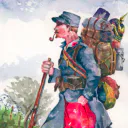


Au moins on parle pas allemand

Sans l'Armée rouge en l'occurrence, c'est probable qu'on parlerait tous Allemands pour le coup.
THE LIBERATION OF UKRAINE
The Germans charges of demolition had collapse 3 sections of the Kanev bridge. With them, the Soviet high command last chance of of gettting the tanks quickly across the Dniepr. Soviet infantry had cross the river at several points. But without the tank supports, the Germans were able to contain the small bridgeheads. After the German defeat at Kursk, the front began to move westward. The Red Army advanced in overwhelming strenght with more than 2,6 millions mens and 2 400 tanks. The German highed command planned to make its stand at the Dnieper river. The army was ordered to dig in on the western bank to form the so called Wornan line. To slow the Soviet advance, Von Manstein's Army Group began a scortched earth policy. Anything that could not be carried away was blown up or burnt. It was nothing but the systematic destruction of eastern Ukraine. As the Germans retreated westwards, they destroyed all the bridges and tore up the railways lines. The advance across the devastated landscape put a huge strain on Red Army logistics. Fuel and ammunitions had to be delivered by trucks over hundreds of miles Heavy artillery and bridging equipment struggled to keep up. North of Kiev, Andrey Kravchenko's 5th Guard Tank Corps became one of the first units to reach Dnieper. Kravchenko was an experimented tank general that played a key part in the Moscow defense in 1941. Following year he commanded a tank corp at the battle of Stalingrad after which his unit was renamed " The Stalingrad Guards Tank Corp ". In 1943, he fought at the famous Prokhovovka Battle part of the Kursk offensive. Kravcnehko was heavily built for a tank soldier. He was so large that when he sat in the commander's seat, It was impossible to to close the hatch. The wide Desna river didn't stop the tanks of kravchenko's 5th Guard Tank Corps. Without waiting for the bridging units, ths mens made their tanks water tight and drove across.
But the Dnieper was too deep to be crossed in this fashion. Only infantry using rafts and floats were able to get across. They established small footholds on the far bank of the river. South of Kiev, an extraordinary attempt was made to get the 40th Army and the 3rd Guard tank Army across the river. The Dniepr here was about 600 meters wide.Almost a thousand pile were used to build a temporary bridge able to wear the weight of a tank. The enginners worked under German artillery fire and aerial bombing. But after 10 days, the bridge was ready. T 34 from the 3rd Guard tank Army begna to cross the Dnieper. Meanwhile, the Germans had been busy strenghtening their defenses. Kiev lay on the far side of the river. It would be almost impossible to capture it by a frontal assault. Therefore, General Vatounin, commander of the Voronej Front, decided to make 2 flancking attacks from his bridgeheads across the river. Troughout October 1943, Vatounin's troops struggled to find their way out of the bridgeheads. As winter came, it seemed like the frontlie had frozen solid. So Vatounin changed his plans and decided instead to target only one bridgehead and use all his armour force to smash their way out. About 40 000 soldiers of the 3rd Guard Tank Army and hundreds of tanks moved north under cover of darkess. On the morning of 5th November, the Red Army attacked, immediatly cutting the highway between Kie and Zhitomir. The Germans only escape route was blocked. Soon, the first T 34 were in Kiev entering by the twisting roads that run though the ravines of the Nivki District. Today the street is still called tank street. In the city itself, burning buildings tracer rounds and flares turned night into day. The Red Army tank crews smashed their way into downtown Kiev. The surviving Germans made a hasty exist. By dawn, the city was clear. General Kravcnehko's fourth Guard tank Corps could add ano another battle honour to their standard, the Battle of Kiev.
The offensive of Korsun Schevchenkovsky began on 24th January 1943. It was lead by the 2nd Ukrainian Front. 2 days later it was joined by the 1st Ukrainian Front on the opposite flank. The attack was led by 245 tanks and self propelled guns of Kravchenko's 6th Guard Army. Self propelled guns or SPG were heavy guns mounted in the chassis of a tank or some other vehicle. There were a mobile form of artillery used to privde fire support to infantry and tanks. Heavy versions like the Soviet SU 152 were also effective at knocking out German heavy tanks like the Tiger. In just 5 days, Kravchenko's tanks had link up with Rotmistrov's 5th Guards Tank Army near the village of Zvevigorodka. Almost 60 000 Germans had been encircled. The trapped troops were known as group Stemmermann. 2 Soviet Tank Armies turned south, preparing to repel any German rescue attempt. The encircled Germans fought on, in the firm believe that help would arrive. But all remembered the fate of Paulus's sixth Army. General Koniev, commanding 2nd Ukrainian Front at this moment, promised Stalin such another victory. But Hitler was equally adamant that no such thing would occur. He told the encircled men : " You can rely on me as on a stone wall. " But for the present, stand film and and shoot as long as you have ammunition. " General Hube, commanding the 1st German Panzer Army radioded the Stemmerman : ' I shall release you, Hube ". Meanwhile the Luftwaffe was able to supply Group Stemmerman by the air. Relying on air supply had been disastrous during the Battle of Stalingrad. The Luftwaffe couldn't bring enough supplies for 300 000 mens. But Group Stemmerman was a fifth of that size. Meanwhile Manstein assembled armoured units to make a rescue attempt. He turned to the 3rd and 4èth Panzerkorps commanded respectively by von Vormann and Hermann Breith.
Breith was a highly experimented 51 years old general. He was a veteran of the campaign of Poland and France. He had served with the Army General staff with the invasion of the Soviet Union. He then commanded a Panzer Division before leading the 3rd Panzerkorps during the Battle of Kursk. The Soviets came under attack from 4 German Panzer Divisions reinforced by 80 Tigers and Panthers of heavy Panzer Regiment Bake. In February 1944, the Red Army's main tank was still the T 34/76. Armed with 76 mm gun, It was no match for the German heavy tanks. The Germans captured the villlage of Lysianka. But they were still a few miles short of breaking trought to Group Stermmerman. And now the Red Army's reinforcements arrived with Bogdanov's 2nd Tank Army. Both sides found it extremly difficult to maneuvre. If previous winters had been unusually severe, this winter was remarkably mild. Already the thaw ahd turned roads into river of mud. The Battle of Korsun Cherkassy pocket bad become the decisive phase of the winter campaign. And It was here that a fearsome new Soviet tank made its first appearance, the Iosef Stalin. The Iosef Stalin or IS 2 tank, was developed as a direct response to German heavy Tiger tank. Its front armor was 120 mm thick. Comparable to the Tiger. And although less accurate and with a slower rate of fire, its powerful 122 mm gun was a serious threat to the German heavy tanks. The IS 2 were grouped into independent heavy tank regiments and assigned to crucial sectors of the front where a breakthough was required. They were particularly effective at storming German towns and cities in 1945 such as Berlin.
Versions of the IS 2 tank were still in service with the Russian Army as late as 1995. The first combat between IS 2 and Tigers and Panthers ended in s stalemate. The German held into their gains but could advance no further. Group Stemmerman was bombarded with leaflets urging them to surrender. General Seydlitz Kurzback who had been captured at Stalingrad. He appealed into them now by loudspeakers. He was now a committed anti nazi. A Soviet enoy was dispatched with propsoed terms of surrender. But he was sent back. Group Stermmerman knew that it was now up to them to fight their way out of the pocket. Fighting desperatly they got as far as Shenderovka, just 5 kilometers short of the 3rd Panzerkorps. A furious Stalin telegraphed Zhukov : " The reason for the enemy's breakthrough was that the weak 27th Army was not reinforced in a timely manner. " claimed Stalin. Rotmistrov's tank Army was hurriedly redeployed to make sure that there would be no breakthrought. A February Frost had frozen the ground hard, restoring momentum to operations. Breith was able to renew his advance on Shenderovka. At the forefront of the fighting, was the 5th SS Panzer Division Viking, recruited largely from Scandinavian volunteers. But one by one, its vehicles were knocked out. Fuel resupply by air was erratic. And often interurpted by bad weather. Field Marshal Von Manstein, commander of the Army Group South, well remembered the Stalingrad disaster. There had been no attemp by the encircled to fight their way out. This time, without consulting Hitler, he gave Stemmerman clear orders : " Group Stemmerman must make the breakthrought itself. to the line Zhurzhentsy - Hill 239. There, It will link up with the 2rd Panzerkorps. The encircled divisions prepared for the last stage of their breakout. On 16th February, they destroyed several heavy equipment and supplies. And at dusk, began their advance.
THE LIBERATION OF UKRAINE
The Germans charges of demolition had collapse 3 sections of the Kanev bridge. With them, the Soviet high command last chance of of gettting the tanks quickly across the Dniepr. Soviet infantry had cross the river at several points. But without the tank supports, the Germans were able to contain the small bridgeheads. After the German defeat at Kursk, the front began to move westward. The Red Army advanced in overwhelming strenght with more than 2,6 millions mens and 2 400 tanks. The German highed command planned to make its stand at the Dnieper river. The army was ordered to dig in on the western bank to form the so called Wornan line. To slow the Soviet advance, Von Manstein's Army Group began a scortched earth policy. Anything that could not be carried away was blown up or burnt. It was nothing but the systematic destruction of eastern Ukraine. As the Germans retreated westwards, they destroyed all the bridges and tore up the railways lines. The advance across the devastated landscape put a huge strain on Red Army logistics. Fuel and ammunitions had to be delivered by trucks over hundreds of miles Heavy artillery and bridging equipment struggled to keep up. North of Kiev, Andrey Kravchenko's 5th Guard Tank Corps became one of the first units to reach Dnieper. Kravchenko was an experimented tank general that played a key part in the Moscow defense in 1941. Following year he commanded a tank corp at the battle of Stalingrad after which his unit was renamed " The Stalingrad Guards Tank Corp ". In 1943, he fought at the famous Prokhovovka Battle part of the Kursk offensive. Kravcnehko was heavily built for a tank soldier. He was so large that when he sat in the commander's seat, It was impossible to to close the hatch. The wide Desna river didn't stop the tanks of kravchenko's 5th Guard Tank Corps. Without waiting for the bridging units, ths mens made their tanks water tight and drove across.
But the Dnieper was too deep to be crossed in this fashion. Only infantry using rafts and floats were able to get across. They established small footholds on the far bank of the river. South of Kiev, an extraordinary attempt was made to get the 40th Army and the 3rd Guard tank Army across the river. The Dniepr here was about 600 meters wide.Almost a thousand pile were used to build a temporary bridge able to wear the weight of a tank. The enginners worked under German artillery fire and aerial bombing. But after 10 days, the bridge was ready. T 34 from the 3rd Guard tank Army begna to cross the Dnieper. Meanwhile, the Germans had been busy strenghtening their defenses. Kiev lay on the far side of the river. It would be almost impossible to capture it by a frontal assault. Therefore, General Vatounin, commander of the Voronej Front, decided to make 2 flancking attacks from his bridgeheads across the river. Troughout October 1943, Vatounin's troops struggled to find their way out of the bridgeheads. As winter came, it seemed like the frontlie had frozen solid. So Vatounin changed his plans and decided instead to target only one bridgehead and use all his armour force to smash their way out. About 40 000 soldiers of the 3rd Guard Tank Army and hundreds of tanks moved north under cover of darkess. On the morning of 5th November, the Red Army attacked, immediatly cutting the highway between Kie and Zhitomir. The Germans only escape route was blocked. Soon, the first T 34 were in Kiev entering by the twisting roads that run though the ravines of the Nivki District. Today the street is still called tank street. In the city itself, burning buildings tracer rounds and flares turned night into day. The Red Army tank crews smashed their way into downtown Kiev. The surviving Germans made a hasty exist. By dawn, the city was clear. General Kravcnehko's fourth Guard tank Corps could add ano another battle honour to their standard, the Battle of Kiev.
The offensive of Korsun Schevchenkovsky began on 24th January 1943. It was lead by the 2nd Ukrainian Front. 2 days later it was joined by the 1st Ukrainian Front on the opposite flank. The attack was led by 245 tanks and self propelled guns of Kravchenko's 6th Guard Army. Self propelled guns or SPG were heavy guns mounted in the chassis of a tank or some other vehicle. There were a mobile form of artillery used to privde fire support to infantry and tanks. Heavy versions like the Soviet SU 152 were also effective at knocking out German heavy tanks like the Tiger. In just 5 days, Kravchenko's tanks had link up with Rotmistrov's 5th Guards Tank Army near the village of Zvevigorodka. Almost 60 000 Germans had been encircled. The trapped troops were known as group Stemmermann. 2 Soviet Tank Armies turned south, preparing to repel any German rescue attempt. The encircled Germans fought on, in the firm believe that help would arrive. But all remembered the fate of Paulus's sixth Army. General Koniev, commanding 2nd Ukrainian Front at this moment, promised Stalin such another victory. But Hitler was equally adamant that no such thing would occur. He told the encircled men : " You can rely on me as on a stone wall. " But for the present, stand film and and shoot as long as you have ammunition. " General Hube, commanding the 1st German Panzer Army radioded the Stemmerman : ' I shall release you, Hube ". Meanwhile the Luftwaffe was able to supply Group Stemmerman by the air. Relying on air supply had been disastrous during the Battle of Stalingrad. The Luftwaffe couldn't bring enough supplies for 300 000 mens. But Group Stemmerman was a fifth of that size. Meanwhile Manstein assembled armoured units to make a rescue attempt. He turned to the 3rd and 4èth Panzerkorps commanded respectively by von Vormann and Hermann Breith.
Breith was a highly experimented 51 years old general. He was a veteran of the campaign of Poland and France. He had served with the Army General staff with the invasion of the Soviet Union. He then commanded a Panzer Division before leading the 3rd Panzerkorps during the Battle of Kursk. The Soviets came under attack from 4 German Panzer Divisions reinforced by 80 Tigers and Panthers of heavy Panzer Regiment Bake. In February 1944, the Red Army's main tank was still the T 34/76. Armed with 76 mm gun, It was no match for the German heavy tanks. The Germans captured the villlage of Lysianka. But they were still a few miles short of breaking trought to Group Stermmerman. And now the Red Army's reinforcements arrived with Bogdanov's 2nd Tank Army. Both sides found it extremly difficult to maneuvre. If previous winters had been unusually severe, this winter was remarkably mild. Already the thaw ahd turned roads into river of mud. The Battle of Korsun Cherkassy pocket bad become the decisive phase of the winter campaign. And It was here that a fearsome new Soviet tank made its first appearance, the Iosef Stalin. The Iosef Stalin or IS 2 tank, was developed as a direct response to German heavy Tiger tank. Its front armor was 120 mm thick. Comparable to the Tiger. And although less accurate and with a slower rate of fire, its powerful 122 mm gun was a serious threat to the German heavy tanks. The IS 2 were grouped into independent heavy tank regiments and assigned to crucial sectors of the front where a breakthough was required. They were particularly effective at storming German towns and cities in 1945 such as Berlin.
Versions of the IS 2 tank were still in service with the Russian Army as late as 1995. The first combat between IS 2 and Tigers and Panthers ended in s stalemate. The German held into their gains but could advance no further. Group Stemmerman was bombarded with leaflets urging them to surrender. General Seydlitz Kurzback who had been captured at Stalingrad. He appealed into them now by loudspeakers. He was now a committed anti nazi. A Soviet enoy was dispatched with propsoed terms of surrender. But he was sent back. Group Stermmerman knew that it was now up to them to fight their way out of the pocket. Fighting desperatly they got as far as Shenderovka, just 5 kilometers short of the 3rd Panzerkorps. A furious Stalin telegraphed Zhukov : " The reason for the enemy's breakthrough was that the weak 27th Army was not reinforced in a timely manner. " claimed Stalin. Rotmistrov's tank Army was hurriedly redeployed to make sure that there would be no breakthrought. A February Frost had frozen the ground hard, restoring momentum to operations. Breith was able to renew his advance on Shenderovka. At the forefront of the fighting, was the 5th SS Panzer Division Viking, recruited largely from Scandinavian volunteers. But one by one, its vehicles were knocked out. Fuel resupply by air was erratic. And often interurpted by bad weather. Field Marshal Von Manstein, commander of the Army Group South, well remembered the Stalingrad disaster. There had been no attemp by the encircled to fight their way out. This time, without consulting Hitler, he gave Stemmerman clear orders : " Group Stemmerman must make the breakthrought itself. to the line Zhurzhentsy - Hill 239. There, It will link up with the 2rd Panzerkorps. The encircled divisions prepared for the last stage of their breakout. On 16th February, they destroyed several heavy equipment and supplies. And at dusk, began their advance.
Batman sera toujours là pour faire régner la justice sur les topics de onche.
il y a 3 ans
D'ailleurs je note que tu as une tendance à me suivre sur un grand nombre de topics.
Batman sera toujours là pour faire régner la justice sur les topics de onche.
il y a 3 ans