

Bah alors les khey y'a pas de topic?
fstv.online/match/sportin[...]arseille-football-1451072
Server 2 pour le match en français..
fstv.online/match/sportin[...]arseille-football-1451072
Server 2 pour le match en français..
il y a un an
Sponsorisé
Connectez-vous pour masquer les pubs






Bah alors les khey y'a pas de topic?
fstv.online/match/sportin[...]arseille-football-1451072
Server 2 pour le match en français..
fstv.online/match/sportin[...]arseille-football-1451072
Server 2 pour le match en français..
J'hésite à mater
il y a un an


Je suis sur le multiplex.
 🔴⚫️ Le Milan d'Ancelotti : une folle intelligence tactique
L'AC Milan n'écrasait pas le championnat italien dans les années 2000. C'était surtout en LDC qu'ils étaient forts. Il n'y avait presque que des stars dans le 11 de départ de ce AC Milan. Regista, Trequartista, Mediano et Medzalé. L'entraîneur turc Fati Terim est limogé en novembre 2001. Ils vont en demi finale de coupe UEFA avant d'arracher une 4ème place en championnat synonyme de LDC la saison prochaine. Une compétition qui rappelle les bons souvenirs avec l'AC Milan d'Arigosaki et de Fabio Capello avec à l'époque le trio néerlandais Rullit, Van Basten et Rijkaard. C'était entre la fin des années 1980 et le début des années 1990. Les 2 survivants de cette époque durant les années 2000 étaient Paolo Maldini dont le père Cesare Maldini a soulevé la première LDC de l'AC Milan en 1963. L'autre survivant est Alessandro Castacurta sur nommé au club Billy. Alessandro Nesta va aussi faire de la défense du Milan une forteresse. Au poste de créateur, Andrea Pirlo repositionné par Carlo Ancelotti au poste de Regista comme l'avait fait son ancien coach Carlo Matzoné à l'époque pù Pirlo jouait à Bretchia. Le Regista sera souvent épaulé par plusieurs milieux de terrain dont Clarence Seedorf ainsi que Genaro Gattuso qui fermait le jeu avant devant, Rui Costa. Parfois ce sera Massimo Ambrosini à gauche de Pirlo et Gattuso à sa droite avec Seedork devant en 10. Ambrosini et Gattuso sont utilisés comme des Mediano. Leur objectif était de couvrir et stabiliser l'arrière garde milanaise tout en montant sur les côtés en jouant avec les latéraux. et les milieux offensifs comme Seedorf à travers à travers un jeu en triangle pour faire progresser le jeu. Le rôle de Seedorf est plus offensif. Cétait un peu un mezzala moderne. Un mezzala au pluriel mazzale est une sorte de numéro 8, un joueur placé dans le demi espace et dont le rôle sera de dénicher tous les espaces disponibles, toutes les brèches que l'adversaire va laisser, afin de créer et servir les attaquants.
Seedorf était aussi un excellent frappeura vec une grande puissance physique. Cette coordination au milieu de terrain était primordiale pour assister les 2 latéraux Maldini à gauche et Costacurta à droite, respectivement 34 / 35 ans et 37 ans en 2003. Après une bonne course sur l'aile, Ambrosini et Gattuso pouvaient colmater les brèches le temps que les 2 latéraux reviennent. Souvent couverts par le défenseur géorgien Kaladze qui pouvait non seulement joueur en défenseur central mais également en latéral gauche. Shevcheko et Inzaghi étaient les 2 attaquants devant. Ce AC Milan a remporté la LDC en 2003 en battant la Juventus en finale. Mais on est encore loin de l'AC Milan spectaculaire qu'on verra par la suite. Pour tenir dans la durée il faut utiliser davantage le potentiel offensif. Ensuite, l'AC Milan recrute le latéral droit Cafu. Malgré ses 33 ans, il était le profil type d'un latéral moderne. Expérimenté tout en montant au milieu de terrain pour aider à la construction des phases offensives. Kaka au poste de numéro 10 remplace un Rui Costa vieillissant. Kaka était un Trequartista, un 10 très offensif, un profil qui collait parfaitement avec le profil de Regista de Pirlo. En attaque au delà de Shevcheko il y a aussi le Danois Thomasson. Sans oublier Inzaghi. Sir Alex dira de Inzaghi qu'il était né hors jeu. La saison 2003 / 2004 est quasi parfaite en Série A pour l'AC Milan avec seulement 2 défaites en championnat. Ils gagnent le Scudetto. En 2004, Shevcheko remporte le ballon d'or. Cependant dans les matchs de coupe cette saison là c'était défaite 4 - 0 en demi finale retour en Coppa d'Italie face à la Lazio après avoir déjà perdu 2 - 1 au match aller. Surtout une élimination inattendue en quart de finale de LDC face à la Corogne malgré une large victoire à l'aller 4 - 1 grâce à Kaka 2 fois, Shevchenko et Pirlo. Mais au retour, Pandiari, Baleron, Fran et Luke font couler l'AC Milan : défaite 4 - 0.
L'AC Milan recrute par Jaap Stam, défenseur néerlandais. Egalement Hernán Crespo qui rejoint en attaque Shevchenko, Inzaghi et Tomasson. Lors de la saison 2004 / 2005, Ancelotti commence déjà à tester son 4 3 2 1 sapind e Noel mais la formation la plus utilisée reste un 4 4 2 losange qui va lui permettre de faire tourner ses 4 joueurs sans changer de système. Cette fois en LDC ils finissent premier de leur groupe devaént le Barca de Ronaldinho et Eto'o. Ils battent ensuite le Manchester United de Ferguson 2 fois. En quart de finale, l'AC Milan élimine son rival l'Inter Milan 5 - 0 au total même si le match retour de se terminera jamais à cause des jets de fumigènes des supporters de l'Inter. En demi finale face au PSV Eindhoven, l'AC Milan s'impose 2 - 0 à l'aller mais au retour l'AC Milan se fait peur. Le PSV Eindhoven mènent 2 - 0 et sont proches d'arracher les prolongations avant qu'Ambrosini réduit l'écart à la 91ème minute. Le PSV Eindhoven marque 1 dernier but 2 minutes plus tard, score final 2 - 1 pour le PSV mais la règle du but à l'extérieur à l'époque. Cependant en finale contre Liverpool, le miracle d'Istanbul arrive. Ils mènent 3 - 0 grâce à Maldini d'abord puis Crespo 2 fois avec une magnifique passe de Kaka. 3 - 0 à la mi temps. Liverpool revient ensuite à 3 - 3 avant de l'emporter aux tirs au but. La saison suivante, 2005 / 2006, l'AC Milan a quasiment le même effectif avec ceci dit l'arrivée du Tchèque Marek Jankulovski au poste de latéral gauche. Alberto Gilardino, attaquant italien, s'ajoute également à l''effectif. En huitièmes de finale de LDC, l'AC Milan écrase le Bayern au mtch retour 4 - 1 après un 1 - 1 à l'aller. 0 - 0 face à Lyon au match aller des quarts de finale avant de l'emproter 3 - 1 au match retour. En demi finale de la LDC, les Rossoneri se font éliminer par le Barca de Ronaldinho, défaite 0 - 1 au match aller avant de faire 0 - 0 au match retour.
C'est la première fois que le Milan d'Ancelotti perd à domicile dans la phase à élimination directe de LDC. Avec le départ de Shevchenko pour Chelsea, la saison suivante en 2006 / 2007, En Série A, la Juventus et l'AC Milan sont impliqués dans le scandale du Calciopoli, le scandale des matchs truqués. Impossible de jouer le titre en 2007 avec le retrait de points en championnat. Ils vont donc tous se concentrer sur la ligue des champions. Et Ancelotti va concocter son fameux 4 3 2 1 sapin avec Maldini 39 ans repassant en défense centrale aux côtés de Nesta avec Jankulovski en latéral gauche et Massimo Oddo en latéral droit arrivé en janvier 2007 de la Lazio qui va parfois jouer à la place de Cafu. Ensuite le trio au milieu Pirlo, Ambrosini et Gattuso. Plus haut, Clarence Seedorf et Kaka qui serviront l'attaquant de poitne qui sera soit Inzaghi soit Gilardino. L'équipe est assez vieille mais l'alliage avec les jeunes fonctionne parfaitement. Ils maîtrisent tout le monde en LDC y compris le Manchester United de Ronaldo et Wayne Rooney. Certes défaite à l'aller 2 - 3 mais l'AC Milan était supérieur dans bien des domaines. On a eu le but de Kaka en solitaire qui s'amuse avec la défense mancunienne. Puis l'AC Milan gagne largement le match retour 3 - 0 grâce aux buts de Kaka, Seedorf et Gilardino. Ils retrouveront Liverpool en finale, cette fois à Athènes. Au milieu de terrain, Man United s'était fait dominer. Face à Liverpool en finale, L'AC Milan domine cette finale, mène 2 - 0 avec un doublé d'Inzaghi et s'impose 2 - 1 malgré une réduction de l'écart par Keut. La dernière ligue des champions remportée par l'AC Milan. Seedorf est le seul joueur de foot à avoir gagné la LDC avec 3 clubs différents : l'Ajax en 1995, le Real Madrid en 1998 et l'AC Milan en 2003 puis 2007. Kaka remporte le ballon d'or en 2007. L'AC Milan décroche aussi la coupe intercontinentale en fin d'année 2007. Une parfaite fin pour la dynastie milanaise.
YouTube
Vidéo YouTubeL'AC Milan n'écrasait pas le championnat italien dans les années 2000. C'était surtout en LDC qu'ils étaient forts. Il n'y avait presque que des stars dans le 11 de départ de ce AC Milan. Regista, Trequartista, Mediano et Medzalé. L'entraîneur turc Fati Terim est limogé en novembre 2001. Ils vont en demi finale de coupe UEFA avant d'arracher une 4ème place en championnat synonyme de LDC la saison prochaine. Une compétition qui rappelle les bons souvenirs avec l'AC Milan d'Arigosaki et de Fabio Capello avec à l'époque le trio néerlandais Rullit, Van Basten et Rijkaard. C'était entre la fin des années 1980 et le début des années 1990. Les 2 survivants de cette époque durant les années 2000 étaient Paolo Maldini dont le père Cesare Maldini a soulevé la première LDC de l'AC Milan en 1963. L'autre survivant est Alessandro Castacurta sur nommé au club Billy. Alessandro Nesta va aussi faire de la défense du Milan une forteresse. Au poste de créateur, Andrea Pirlo repositionné par Carlo Ancelotti au poste de Regista comme l'avait fait son ancien coach Carlo Matzoné à l'époque pù Pirlo jouait à Bretchia. Le Regista sera souvent épaulé par plusieurs milieux de terrain dont Clarence Seedorf ainsi que Genaro Gattuso qui fermait le jeu avant devant, Rui Costa. Parfois ce sera Massimo Ambrosini à gauche de Pirlo et Gattuso à sa droite avec Seedork devant en 10. Ambrosini et Gattuso sont utilisés comme des Mediano. Leur objectif était de couvrir et stabiliser l'arrière garde milanaise tout en montant sur les côtés en jouant avec les latéraux. et les milieux offensifs comme Seedorf à travers à travers un jeu en triangle pour faire progresser le jeu. Le rôle de Seedorf est plus offensif. Cétait un peu un mezzala moderne. Un mezzala au pluriel mazzale est une sorte de numéro 8, un joueur placé dans le demi espace et dont le rôle sera de dénicher tous les espaces disponibles, toutes les brèches que l'adversaire va laisser, afin de créer et servir les attaquants.
Seedorf était aussi un excellent frappeura vec une grande puissance physique. Cette coordination au milieu de terrain était primordiale pour assister les 2 latéraux Maldini à gauche et Costacurta à droite, respectivement 34 / 35 ans et 37 ans en 2003. Après une bonne course sur l'aile, Ambrosini et Gattuso pouvaient colmater les brèches le temps que les 2 latéraux reviennent. Souvent couverts par le défenseur géorgien Kaladze qui pouvait non seulement joueur en défenseur central mais également en latéral gauche. Shevcheko et Inzaghi étaient les 2 attaquants devant. Ce AC Milan a remporté la LDC en 2003 en battant la Juventus en finale. Mais on est encore loin de l'AC Milan spectaculaire qu'on verra par la suite. Pour tenir dans la durée il faut utiliser davantage le potentiel offensif. Ensuite, l'AC Milan recrute le latéral droit Cafu. Malgré ses 33 ans, il était le profil type d'un latéral moderne. Expérimenté tout en montant au milieu de terrain pour aider à la construction des phases offensives. Kaka au poste de numéro 10 remplace un Rui Costa vieillissant. Kaka était un Trequartista, un 10 très offensif, un profil qui collait parfaitement avec le profil de Regista de Pirlo. En attaque au delà de Shevcheko il y a aussi le Danois Thomasson. Sans oublier Inzaghi. Sir Alex dira de Inzaghi qu'il était né hors jeu. La saison 2003 / 2004 est quasi parfaite en Série A pour l'AC Milan avec seulement 2 défaites en championnat. Ils gagnent le Scudetto. En 2004, Shevcheko remporte le ballon d'or. Cependant dans les matchs de coupe cette saison là c'était défaite 4 - 0 en demi finale retour en Coppa d'Italie face à la Lazio après avoir déjà perdu 2 - 1 au match aller. Surtout une élimination inattendue en quart de finale de LDC face à la Corogne malgré une large victoire à l'aller 4 - 1 grâce à Kaka 2 fois, Shevchenko et Pirlo. Mais au retour, Pandiari, Baleron, Fran et Luke font couler l'AC Milan : défaite 4 - 0.
L'AC Milan recrute par Jaap Stam, défenseur néerlandais. Egalement Hernán Crespo qui rejoint en attaque Shevchenko, Inzaghi et Tomasson. Lors de la saison 2004 / 2005, Ancelotti commence déjà à tester son 4 3 2 1 sapind e Noel mais la formation la plus utilisée reste un 4 4 2 losange qui va lui permettre de faire tourner ses 4 joueurs sans changer de système. Cette fois en LDC ils finissent premier de leur groupe devaént le Barca de Ronaldinho et Eto'o. Ils battent ensuite le Manchester United de Ferguson 2 fois. En quart de finale, l'AC Milan élimine son rival l'Inter Milan 5 - 0 au total même si le match retour de se terminera jamais à cause des jets de fumigènes des supporters de l'Inter. En demi finale face au PSV Eindhoven, l'AC Milan s'impose 2 - 0 à l'aller mais au retour l'AC Milan se fait peur. Le PSV Eindhoven mènent 2 - 0 et sont proches d'arracher les prolongations avant qu'Ambrosini réduit l'écart à la 91ème minute. Le PSV Eindhoven marque 1 dernier but 2 minutes plus tard, score final 2 - 1 pour le PSV mais la règle du but à l'extérieur à l'époque. Cependant en finale contre Liverpool, le miracle d'Istanbul arrive. Ils mènent 3 - 0 grâce à Maldini d'abord puis Crespo 2 fois avec une magnifique passe de Kaka. 3 - 0 à la mi temps. Liverpool revient ensuite à 3 - 3 avant de l'emporter aux tirs au but. La saison suivante, 2005 / 2006, l'AC Milan a quasiment le même effectif avec ceci dit l'arrivée du Tchèque Marek Jankulovski au poste de latéral gauche. Alberto Gilardino, attaquant italien, s'ajoute également à l''effectif. En huitièmes de finale de LDC, l'AC Milan écrase le Bayern au mtch retour 4 - 1 après un 1 - 1 à l'aller. 0 - 0 face à Lyon au match aller des quarts de finale avant de l'emproter 3 - 1 au match retour. En demi finale de la LDC, les Rossoneri se font éliminer par le Barca de Ronaldinho, défaite 0 - 1 au match aller avant de faire 0 - 0 au match retour.
C'est la première fois que le Milan d'Ancelotti perd à domicile dans la phase à élimination directe de LDC. Avec le départ de Shevchenko pour Chelsea, la saison suivante en 2006 / 2007, En Série A, la Juventus et l'AC Milan sont impliqués dans le scandale du Calciopoli, le scandale des matchs truqués. Impossible de jouer le titre en 2007 avec le retrait de points en championnat. Ils vont donc tous se concentrer sur la ligue des champions. Et Ancelotti va concocter son fameux 4 3 2 1 sapin avec Maldini 39 ans repassant en défense centrale aux côtés de Nesta avec Jankulovski en latéral gauche et Massimo Oddo en latéral droit arrivé en janvier 2007 de la Lazio qui va parfois jouer à la place de Cafu. Ensuite le trio au milieu Pirlo, Ambrosini et Gattuso. Plus haut, Clarence Seedorf et Kaka qui serviront l'attaquant de poitne qui sera soit Inzaghi soit Gilardino. L'équipe est assez vieille mais l'alliage avec les jeunes fonctionne parfaitement. Ils maîtrisent tout le monde en LDC y compris le Manchester United de Ronaldo et Wayne Rooney. Certes défaite à l'aller 2 - 3 mais l'AC Milan était supérieur dans bien des domaines. On a eu le but de Kaka en solitaire qui s'amuse avec la défense mancunienne. Puis l'AC Milan gagne largement le match retour 3 - 0 grâce aux buts de Kaka, Seedorf et Gilardino. Ils retrouveront Liverpool en finale, cette fois à Athènes. Au milieu de terrain, Man United s'était fait dominer. Face à Liverpool en finale, L'AC Milan domine cette finale, mène 2 - 0 avec un doublé d'Inzaghi et s'impose 2 - 1 malgré une réduction de l'écart par Keut. La dernière ligue des champions remportée par l'AC Milan. Seedorf est le seul joueur de foot à avoir gagné la LDC avec 3 clubs différents : l'Ajax en 1995, le Real Madrid en 1998 et l'AC Milan en 2003 puis 2007. Kaka remporte le ballon d'or en 2007. L'AC Milan décroche aussi la coupe intercontinentale en fin d'année 2007. Une parfaite fin pour la dynastie milanaise.
il y a un an
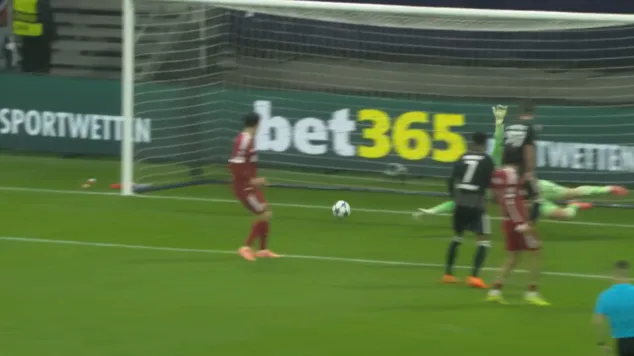
But de Francfort face à Liverpool.
1 - 0 pour Francfort

YouTube
Vidéo YouTubeInverted wingers, fullbacks pushing forward and deliberate choice to collapse the pitch rather than stretching it. This really clicked in their 3 - 0 win against Liverpool. It gave complete control in the center of the pitch and it gave Doky the perfect space to constantly run at the backline. It shut down Liverpool every time they pushed forward. Man City lines up in a 4 2 3 1 formation. The recent reintroduction of Cherky seemed to have reallowed Pep Guardiola to double down on this setup. From Man City's own box, all the players start to move in their positions. In the first minutes, the fullbacks are in a position that would force the fullback to press them once they received the ball, leaving a big gap for the winger to run into. The fullbacks hre were O'Reilly and Nunes. Then the 2 wingers will invert in a more central position mostly hovering around the opposition's 2 holding midfielders which gives the attacking midfielder Foden more space to receive the ball. And the final key to the puzzle is Haaland who is the only player to not get involved in the team's attack. Rather he opts to play as high as possible to stretch the defensive line and create as much space between midfield and defense. Liverpool were reluctant to keep a high line against Man City as Haaland's pace can expose this like he did against Bournemouth for example. So Liverpool played quite deep, leaving gaps between the lines. To help out the 2 center backs, the 2 holding midfielders Bernardo Silva and Niko Gonzalez that will move around and help the team build the attack. They either dropped between them or moved out wide acting as a fullback or either staying in the midfield, allowing the center backs to push forward themselves. It's similar of what we see from Kompany with Bayern Munich with both fullbacks instantly pushing forward on the flanks.
The main difference between these 2 setups is that the wingers in Bayern Munich's system are still hugging the touch line while the fullbacks will invert into a more central position. Both teams want to build with combinations between the holding midfielders and the center backs. When Liverpool pressed a bit more aggressively, the fullbacks dropped a bit deeper to help add support. But because the wingers were also in a more central position, it's not rare to see them drop all the way back to help out. This system essentially allowed Manchester City to outnumber Liverpool's press. For example as they circualte possession around the back, there are 9 players basically all ready to drop and help the team with only Haaland not getting involved. Guardiola tries to adapt to the players he has. Rather than opting for a wider and deeper formation, like he typically would do these last years, he is now attempting to stretch the pitch vertically with Donnarumma and Haaland being a direct link thanks to long balls and forming a big cluster in the center with a lot of players rotating between themselves. For example on the left flank, Doku and O'Reilly were constantly changing which one hugged the touchline and which player attacked the half space. In this game mostly because of Salah not tracking back effectively they would find themselves in a 2 v 1 against Conor Bradley. It's a setup that means that Man City are more transitional and direct this season compared to last one because once they break forward, there are so many players in a central position ready to attack the box.There is not so much of a focus on stretching the pitch in the final third. Haaland's goal to make it 1 - 0 was the perfect example of this. As Man City moved the ball out wide, all the attacking players are no wider than the width of the box with the only player out wide being the right back Nunes. Back then it would be more common to see the opposite winger out wide on the opposite flank.
That meant circulating possession with more runs into the half space ahead of the ball. But now there is a heavier focus on crosses into Haaland and having more players running into central channels. This leads to a slight increase in through balls and dribbles compared to last season. While cutbacks have also increased as it often means players like Doku ends up in this position. Speaking of Doku, he played his role perfectly. He was constantly running at Bradley and ended up with a goal from a brillant long range shot. Also picking up the penalty for Man City in the first half. Liverpool struggled to adapt. The first goal they conceded is the perfect example of a change in mentality compared to last season. At the start of the move, Man City is playing out from the back brillantly but the counterpress from Liverpool is very disconnected. Liverpool's defensive mentality was one of the main reasons they won the Premiere League in 2025 even when they were not necessarly playing their best offensive football. And they were consistently able to win the ball back higher up the pitch thanks to their counterpressing intensity. But this more cautious setup and not wanting to committ too many players forward is harming them this season. It's a similar scenario for Man City's second goal. Even though it was from a corner, they were too slow to close down Gonzalez on the edge of the box who had all the time he needed to set up his shot. Offensively speaking, barrel a couple of well worked moves, Liverpool didn't offer much going forward. Van Dijk's disallowed goal was a controversial decision but I don't think this would have changed the outcome of the game. Man City dealt with Liverpool's threats pretty consistently. Guardiola may have realized taht the era of slow positional football has reached its limit. This new system is one that prioritizes verticality and fast breaks forward. It seems to play directly into the strenghts of Man City squad.
il y a un an
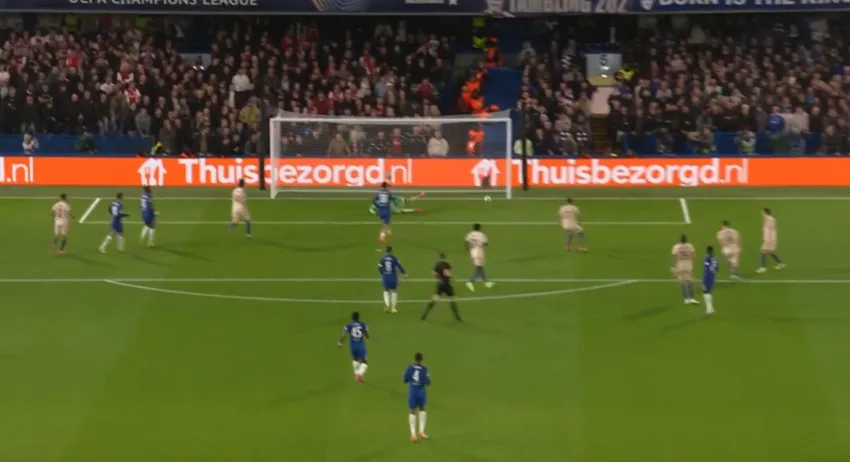
But de Chelsea face à Ajax sur une frappe déviée : 2 - 0 pour Chelsea.

YouTube
Vidéo YouTubeDefensively, Liverpool looked like a 4 4 2 that often looked like a 4 2 4 with Szoboszlai joining Ekitiké in the press while the wingers stayed wide. This shape is generally quite effective as Pep Guardiola is perhaps the torchbearer for positional football and one of his favourite build up shapes is the 3 2 2 3, usually with a fullback inverting or like we saw in Manchester City's treble winning season, a center back like Stones pushing into the midfield to make a midfield box. So the 4 2 4 allows the forwards to cut out the pivots and the deeper midfielders to be on the twin 10s. But during this match, Man City didn't use this shape or even sticked to positional structures. In the build up we would occasionally see them shift into their back 3. But the key thing is this was done temporarily because Liverpool were hyper aggressive in the press and would potentially have been man to man here. So this short shot movement would allow Man City to still have a man advantage through either Bernardo Silva or Nico Gonzalez dropping into the backline. When City shifted into their temporary back 3 and the ball went wide to one of the wider center backs, Liverpool's press never relented and it was up to one of their wingers to continue the press onto the wider center backs. This caused huge issues. Pep Guardiola didn't opt for inverted fullbacks for the most part. While both O'Reilly and Nunes are natural midfielders, they were very much deployed as traditional fullbacks, staying wide and deep in the first phase with the wingers pressing narrow. If a fullback was found, problems would begin because there were only 2 men left in the midfield for Liverpool so neitehr of them would push wide to press the fullback as this would lead to a chasm opening in the center. So it had to be Liverpool's own fullbacks pushing up. And this naturally created space out wide for the likes of Cherki and Doku to push up and potentially drag the defense out of position.
But what was even more important is what City did in the center. The risk when defending in a 4 2 4 is seeing the 2 central midfielders being hopelessly overloaded so at least 3 things are important from a defensive perspective. When pressing, ensure that there is enough pressure on the ball to make forward passes difficult. Also try to keep one of the midfielders in your cover shadow so that they are not an easy passing option. If you are choosing to not press in the 4 2 4, make sure that the horizontal distances between these 4 are managed to make this initial pass impossible. But Liverpool had major issues with this last point and Man City made sure of that. The major benefit for City of having both these men here is that it allowed the wingers on paper to move inside the pitch. Rather than having a strict structure, occupying constantly the half spaces for example, or staggering in a very specific manner, they were granted almost ultimate freedom. The result of all of this is that in City's ideal shape, they had 2 center backs and they had up to 5 midfielders looking to overload the 2 Liverpool's midfielders. So it became even more important for this Liverpool's front 4 to never let the first pass inside the pitch as it would mean major danger. One rotation that we particularly saw was between Doku and O'Reilly. Realizing that the front 4 were fairly easy to bypass and Salah was not expected to track back for the most part, it became crystal clear that there would be available space here. O'Reilly would move infield at times with Doku then becoming the wide man so that he could be the man to receive the ball and get the isolation against Bradley. Doku as a result attempted 9 dribbles and completed 8. Since the isolation couldn't be allowed to continue for too long, Gravenberch often found himself moving wide to assist Bradley which was dangerous as that massive central overload could potentially become even worse.
But Szoboszlai could drop deep quickly to try to compensate. Liverpool's shape was always going to have risks but it's not always bad. At beginning of the second half, Liverpool often regained possession back here through the high press. The first issue was if the first layer of pressure was ever bypassed, they were in serious trouble with Mac Allister and Gravenberch having to to decide whether to back up the press or drop a little bit more and give up possession. More often than not, the decision was to press, which could leave the back 4 vulnerable. Liverpool's goals in possession and City's own shape in defense were just as interesting as Man City had a very unusual pressing shape. Much like when in possession, the center of the pitch was key defensively for Man City. Liverpool as always looked to build with the back 2 and deep on the pitch, Bradley and Robertson tended to stay wide but as they progressed, they would be expected to provide the width. So Wirtz down the left in particular tended to move central quite early which was key. City were planning to press in somewhat of a 4 4 2 with Foden pushing up alongside Haaland, meaning Man City themselves would be in danger of being overloaded through the middle. But Pep Guardiola knew this and made adjustments accordingly. Firstly, the 4 4 2 became dynamic. And where usually we see teams use a piston press that leads to to both center backs getting on the ball, the Citizens identified their target. Foden would start deeper with Haaland always on Van Dijk with the goal being to give to Konaté the first pass as he was nowhere near as threatening on the ball as Virgil Van Dijk and it was effective, with Konaté having to make 81 touches, most of Liverpool's team. This was backed up by Cherki who almost never defended wide, initially tucking right in alongside Wirtz or Mac Allister as the right center back being on the ball meant that this pass was unlikely so he could efford to cheat infield to even matters up here.
It was only when the shape was set and Foden could keep a midfielder in his cover shadow that he would then push up and look to apply pressure on Konaté. But here is the thing. Liverpool didn't need to play infield to ba a threat as they had identified a much more direct route to goal. They felt Mohamed Salah had the physical beating of O'Reilly. So even without picking the heads up, Liverpool constantly looked to hit this zone and time and time again, Salah was lurking throughout 90 and got into dangerous positions but never quite made it count. This play might be part of the reason Man City didn't want Van Dijk on the ball as his big diagonal is notoriously accurate. So he might have had even more luck finding the Salah's run in behind. And even deeper on the pitch, Man City's dedication to protecting the center was visible,a s they alternated between a 4 1 4 1. But often, it was Bernardo Silva pushing up as well as Cherki tucking in who would look to sit on the deepest 8, so that the Man City's shape created a natural funnel into the wide areas where City down the right in particular felt confident in handling it as Wirtz often left Robertson isolated which may have been part of the reason Kerkez was brought on to bring a little bit more attacking thrust.
il y a un an
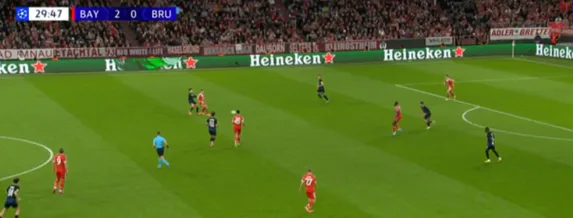
2 - 0 pour le Bayern.

YouTube
Vidéo YouTubeA few secons ago, most of the teams were happy defending with a numerical disadvantage high up the pitch, focusing on compactness and forcing the ball out wide. But as teams became more comfortable playing out from the back, that approach didn't work as well. So instead of defending space, teams now began to defend players. Man marking removed natural passing options. More touches were under pressure and mistakes became more common. TO some managers play out from the back is still worth the risk, to dictate the tempo, control possession and choose where the risk is taken. 3 ways ot hurt man marking systems. First, pressure is rarely immediate in certain positions. Defenders still need to protect depth and keep central compactness which means certain passes are allowed before the press is fully initiated. Second, the goalkeeper will always be the extra man. If you rush him there is a risk to leave an outfield player to attack. Third, because players are tied to opponents rather than zones, rotations can be extremely effective, to drag defenders, distort the structure and open spaces wherever you want. This season there was an increase of long passes from goalkeepers compared to last year which is probably a direct consequence of more aggressive pressing from the majority of the teams. The main idea is to have a lot of players to start near the box and the line of players all ready in attack, creating spaces between the lines Then by playing the ball into any one of these players, you can often find a simple layoff into the center. This exploits the fact that this layoff is difficult to track because even though the defender may be in the way, there are different routes they can take. Lille vs PSG started with lots of players in a deep position, it creates a gap behind the first press.
Once the striker receives the ball it's difficult for PSG to intercept this layoff as these 2 players can rotate to be in the line of sight of the player making the pass then they are free to push forward. One of the most common approach as it's the safest option in case you lose possession and it can quickly lead to an opportunity if done correctly. It's also one of the most inconsistent as anything could happen after an aerial duel. Chelsea under Maresca had Sanchez as gk often opting for a low driven pass into the forwards. Maresca would often get his midfielders to move slightly widers and open up a centrla pass into the forwards who then has more options in support. At times the low driven pass can go through the midfielders as well. We may often see this often in the US world cup 2026. A lot of managers want to find advantages deep in their own half. A few principles are seen in most teams playing out from the back : use the gk, find the third man and stretch the pitch as much as possible. Shapes like the 3 4 4 are very frequent now, used by De Zerbi with Marseille for example. Farioli at Porto, Niko Kovac at Dortmund, even by Guardiola at Man City. The main advantage is that it creates triangles at the base and frees up big gapes between the lines that can be exploited quickly. The move nearly always start with the center back passing into the keeper. As the striker curves his run to close off a pass back to his player, the team in possession will look to go back to this center back indirectly through the middle. If the press is really aggressive then you can often find a lofted pass into one of the fullbacks who then has space to push forward. When the progression is out wide we will often see only 1 outfield player in the center to have more players dropping forward to the ball in the half space.
But this 3 4 4 shape is still pretty positional and relatively easy for man markingteam to track which player is actually theirs. What about teams rotating all over the pitch, making it difficult for the defending team to figure out which player they actually need to pick up? Kane for Bayern during build up often drop outside the box where defenders are hesitant to follow him all the way back there because they can leave big gaps at the back. So we start seeing taems go the opposite way. Rather than having your forwards drop towards the ball, what happens when your defenders attack forward? Spaliti's juventus vs Gasperini's AS Roma showed us. Gasperini is known for his man marking system. Center back Bremer rushes forward which frees a gap in the center and now it's easier for the gk to have time on the ball because the player that would have close him down is nowhere to be seen. There are a few advantages to this rotation. You removed a dangerous attacker from the opposition and you forced him to an uncomfortable defensive position You also now have a physical player you can aim for from long balls, slowly destabilizing Roma's defense. Against Roma, Como under Fabregas would have one of the center backs play the ball then overlap towards the flank, forcing a change in man marking and slowing down the press back onto the keeper. Then next time the same player fakes a run out wide and ran into the center, movements that cause confusion and hesitation in the first press. Build doesn't necessarly have to lead to a goalscoring opportunity. It could be used as a way of controlling possession and starting from a more advanced position. But this idea of pushing your defender forward is taken to the extreme by some managers. Like Fribourg in the Bundesliga or Como under Fabregas often pushing everyone except the 2 center backs and the gk forward on the defensive line.
So you have a 3 v 2 game going on at the back. When the free player receive, you have a player at least dropping off this big cluster in attack to give the team an option between the lines. This might be a great way to move into the opposition's half but it rarely result into an opportunity. To counter this, in a recent match Inter Milan vs Como, Inter tried to counter this by pressing 3 v 3 against the goalkeeper and the 2 center backs, meaning they had a man disadvantage in the defensive block. It's risky but limits the options Como have in this position. So Fabregas had one more player to drop and create a 4 v 3. But then Inter made it 4 v 4. Given Inter won 4 - 0, this setup might have worked perfectly. There are teams who when in possession are not focused on keeping specific structures but are rather more interested in creating big cluster of players in certain areas of the pitch and exploiting these man marking systems in a completly different way compared to more positional teams. These ideas are far less common and probably harder to coach. But who knwos, build up might head into that in the future. Fluminense is a perfect example. They are not as relational as they were under Fernando Diniz but there are still similar principles in this team. Starting from a 4 2 3 1 shape, the holding midfielder Martinelli will start next to the keepr then the center backs starting either side in a line. Once the goalkeeper taps it into the midfielder, and the press is triggered, Martinelli continues his run into the midfield and moves over to the flank where the ball is played. This helps instantly his team creating a cluster of players on this side of the pitch. He is often not followed which makes it easier for Fluminense to find an advantage on this flank. If he is followed then the keepr has no one near to close him down.This means they can build their attack more slowly. Racing Santander under José Alberto in Spanish second division, plays in a similar way.
il y a un an
Sponsorisé
Connectez-vous pour masquer les pubs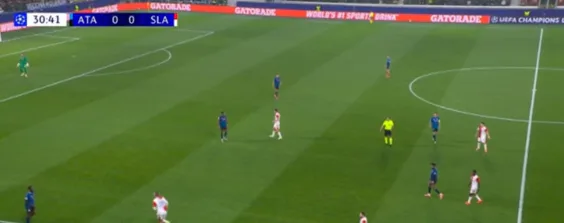
0 - 0 entre Atalanta et Prague.

YouTube
Vidéo YouTubeWith only 33% of possession, Benfica produced an xG of 3,14 with 22 shots and 8 big chances. In possession Real Madrid lined up in a 4 3 3. But as usual with Vinicius and Mbappé, Real Madrid want to concentrate their attacks on their left flank. There were constant rotations toward this position. Right winger Mastantuono would move more centrally to provide support, freeing the right flank for overlapping runs like from Valverde or from Arda Guler shifting over. However there seemed to be more hesitations in making these runs Madrid ended with many players ready to circulate possession. So there wasn't much support on the right flank with Mastantuono moving more centrally. Madrid had no real striker / 9 so their defenders had pretty much no one to cover in the center with Madrid looking to overload the wings. Theorically it's okay to create from deeper then run at their defense. But against Mourinho's Benfica it was difficult to break them down. Benfica had enough players to close down any threat. Real Madrid might have try to put a lot of players on the left, this didn't look like Diniz's relationism. Their passes were slow and relatively easy to intercept. If they pushed a lot of players on the left, they would be exposed to counters. That led to Benfica's equalizer. Benfica defended in either a 4 4 2 or 4 5 1. always with at least one player on the defensive line ready to attack. It led to Benfica's first goal then second goal since the counter led to a corner which led to a penalty. Same patterns in second half. Even the third goal.

YouTube
Vidéo YouTubeThat Arsenal 4 3 3 on paper morphed into a 4 3 1 2with Odegaard alongside Jesus ready to close down the center backs and initially Man United built with Casemiro as single pivot. But this would make it too easy for Declan Rice to tie him up. So Mainoo became the second option. Arsenal were hesitant to commit Zubimendi into the press as it would leave a chasm in the midfield. So Arteta entrusted Rice's athleticism to cover both and anticipate which pivot United would look to pass to. Arsenal's defensive shape was a 4 4 2. To help United's center backs, Luke Shaw from left back would start deeper initially. However Saka could join the press and make it 3 v 3. This was backed by Rice and Zubimendi pressing Casemiro and Mainoo. The risk was having Fernandez drifting across and getting the ball between the lines. However Saliba was supposed to be man oriented on Fernandez. Gabriel had to stay touch tight with Mbeumo. Dalot was agressive down the right hand side for Manchester United and provide the width which allowed Amad to move infield. There was danger if Trossard didn't track his man. However Arsenal would by times switch from agressive 4 4 2 to a more conservative 4 4 2 allowing their pivots to protect the center and the space between the lines. However on the left, Shaw could push up as well and with Saliba following Fernandez it could create gaps for Dorgu to potentially run into. We see shades of this with Dorgu's goal. Manchester United also defended in a 4 4 2 most of the match but they were sitting deeper with their forwards on the pivots rather than pressing the center backs. Arsenal built with a back 3 with their left back Hincapie going forward while Rice receiving free pass in the left half space. However Man United's block was so narrow that it was the wide regions that provided most of the opportunities for Arsenal. The right winger, right back and midfielder from Arsenal could rotate.
This could have worked if Dorgu was drawn higher up trying to press out wide. Even if they had a lot of 1 v 1 out wide, Arsenal wingers weren't able to make the most of it. Then when later on Zubimendi dropped alongside the center backs to form a back 3 with Rice as pivot, it tended to attract one of the midfielders higher up the pitch leaving the other more isolated, creating situations where Arsenal could find a man in a position to turn, with the 2 pivots deep dragging Casemiro high.However, the combination of poor execution and Man United being more agressive in closing down the men in these positions meant that Arsenal were rarely able to turn and create high quality opportunities in open play.
il y a un an
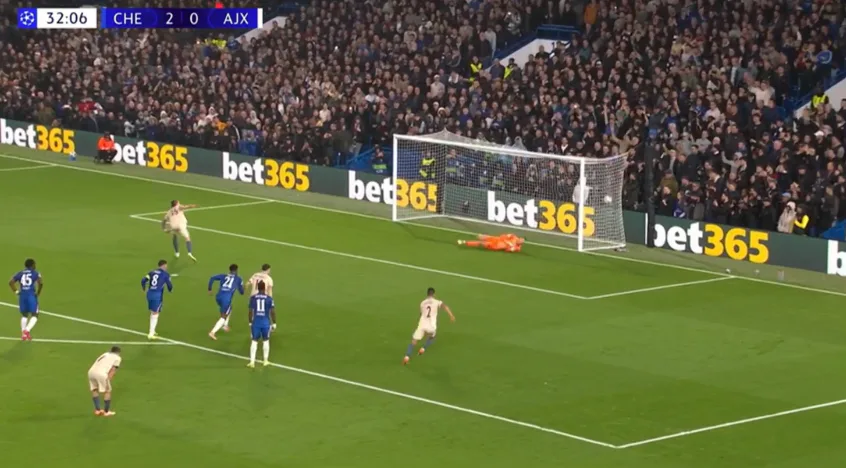
But de l'Ajax sur pénalty pour réduire le score à 2 - 1 pour Chelsea.


YouTube
Vidéo YouTubeRoughly between 2017 and 2023 there was a consensu on how teams should attack. Barcelona, Man City, Liverpool, Arsenal. They converged on remarkably similar structures on possession : 3 2 5 or 2 3 5. Many teams tried to imitate it. When in defense, these teams tended in some sort of zonal system, whether they were in a back 5, 4 3 3 or 4 4 2. Defenders had to protect an area rather than picking a man all the time. Zones meant there were gaps to be exploited. If so what happens if the opposition prioritzes putting multiple players right on the edge of multiple zones? Controlled chaos. The back 4 felt the brunt of this because teams knew that 90% of the teams had a back 4 so what would happen if you attacked with a front 5? First a natural overload up here quantitatively. It also meant that they could truly expose the edges of the zone. The half space became the talk of the town, the area where midfielders, center backs and fullbacks could make arguments that someone else should be covering that player. Any dropping false 9 could cause similar dilemma between the center backs and every covering midfielder. If the defense shifted across instead, the switch and the potential isolation was on. Positional play wss designed to create these zones of ambiguity : park your wingers to pin the fullbacks, drop your false 9 to drag the center backs and flood the half spaces with attackers. Maintain the structures, let the ball do the work and watch the defenses scramble to figure out who is marking who. For years in world football it was the most effective attacking system. But defenses ended up adapting. Bayern vs Arsenal in 2025 is a perfect example of that. In both cases the center backs are high. Both teams defending with extreme man to man marking structures. It's becoming normal at top football.
Because man to man pressing solves the problem that positional play created. Now every defender know who they are responsible for. Every single player can receive the ball under constant pressure. No time to turn, to scan or to pick their pass. They are fighting to control the ball. This means a lot of possession teams are often losing the ball, going backwards or being forced into desperate long balls. The pretty patterns that unlocked zonal defenses don't work against man to man marking. Also one of the goals of positional plays was to get men into dangerous positions between the lines. If you face a strict man to man system, there are no lines, making it much harder to get men here. The solution to man marking however was written in the 1940s. During a pre season training, a Soviet coach Boris Arkdiev led a team, Dinamo Moscow. His team was the refining W M formation which was essentially a 2 3 5, playing what Arkdiev called organized disorder. 4 forwards would hold their orthodox positions, moving in their channels but then one player would suddently break the pattern, running diagonically left to right, disrupting the defensive structure. A forward moving unexpectedly, much like a false 9. It was difficult to follow that player and the other benefited because suddently they had a free teammate to whom they could pass. Today we would call it positional fluidity. So the opponents adapted with man to man marking. So the defenders switched to a mobile system to adapt, following their opponents according to where they went. When defenses go man oriented, the only solution is extreme fluidity. Make them follow you into positions they are not comfortable defending. If they follow you you drag their structure apart and if they don't follow you, you've got a free man. You created a problem they can't solve with discipline alone. Mikel Arteta spent years under Pep Guardiola at Man City. He learned positional play but also knew the shift that was coming.
Arsenal doesn't only have player able to drop into positions temporarily but can start a full 90 minutes in multiple positions wthout considering it a new role. That flexibility is key to make extreme rotations work against man marking. Because if you are going to drag defenders all over the the pitch. You need players comfortable playing anywhere. Man to man marking can mean leaving gaps far bigger than what positional play allowed. Pep's goal isn't to have isolations on the wing with skillful players anymore with his 3 2 5. Modern football doesn't allow you for this kind of controlled and structured progression that positional play has built on. But the widest players aren't the most skilled anymore but rather players facilitating the rest of the team's objectives. Pep is having a more narrow attacking structure than before. It demands every central player to be very technical to allow siuper tight combinations. Man to man marking makes it hard to find men between the lines. But by concentrating so many players in one zone, if one defender doesn't pay attention, the overload occurs and suddently they can get a man between the lines. That's a big reason why Pep Guardiola isn't using a back 3 in the build up but a back 2. Doku went from a hug the touch line winger typically beating his fullback to now is drifting more centrally just like Cherki .Even his deeper midfielders, often Foden or Silva, excel 1 v 1. One of the ways of breaking a man to man press is by having a player beat their man and this is where the system can begin to crumble. Just one man getting past his defender means that now either he can progress untracked or another defender has to come across leaving his man free which can have a domino effect. But dribbling isn't the only way to get past your man.
Looking at the Arsenal's current squad, many of them are technical but they are also either massive, incredibly strong physically or have incredible running powers. If you can't pass or dribble through a press, why not overpowering it? Rice is a perfect example oif that. Can his man keep up with him physically? Can he match his speed when he hursts forward? Can he batttle when he holds him off? A few years ago, the trend at top football was false 9 everywhere with Pep Guardiola building around players like Foden, Sterling or Jesus. Arsenal did similar things with Jesus or Havertz. Donnarumma is a better shot stopper than Ederson but he is worse than Ederson with the ball. They are willing to go long more often to bypass that press entirely. They no longer mandate the shorter, intricate passes of Ederson. Previously when Pep had traditional lines, he drilled into them that their job was more than just goals. Lewandowski became more well rounded, Aguero's career with City was at risk for a moment before he adapted. Haaland for a while did a bit of this as well with Haaland dropping in. Sometimes his run would be ignored with his team opting for short passes but now even if it's a lower percentage, they make that pass to Haaland. Because when man marking makes the perfect build up impossible, directness is king and you can launch a ball to a physical specimen who can fight for it, hold it up or run in behind. That's why City squeezes in so many playmakers : to find that pass. Arsenal are trying the same thing with Gyokeres. Man marking makes open play difficult. If every receiver has instant pressure, why not wait for set pieces? Never more goals were scored from set pieces these last 5 years than this season so far. Rotation, physicality, directness, dribbling, long throws, set pieces. There is no one solution to modern defending. So there is no only one attacking solution as well.
il y a un an
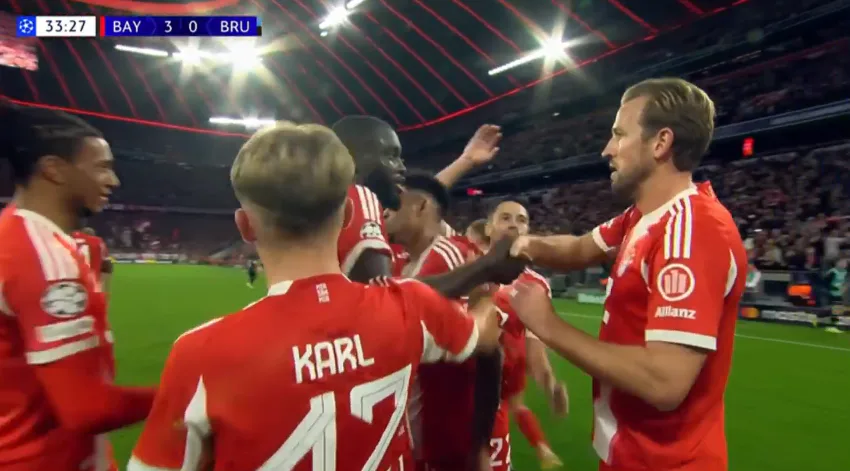
But du Bayern de Luis Diaz : 3 - 0 pour le Bayern.


YouTube
Vidéo YouTubeLe Barca est 9ème, 13 points comme 8 autres équipes. Le PSG a un goal average de + 10 donc si el PSG gagne avec 1 but d'écart cela force Chelsea à gagner Naples 6 - 0 par exemple. Cela force aussi le Barca à gagner par 6 buts d'écart face à Copenhague. Cela force le Sporting et City de gagner par 7 buts d'écart respectivement face à Bilbao et Galatasaray. L'Atlético Madrid affrontera Bodo Glint Avec 6 points si Bodo veut espérer être top 24, victoire obligatoire face à l'Atlético. L'Atalanta 13ème affronte l'USG 31ème de LDC avec 6 points. Même avec une victoire et 9 points le top 24 est compliqué car la différence de but est trop énorme. Avec un match nul Copenhague pourrait peut être terminer top 24 et si il y a victoire, c'est sûr à 100%. Mais c'est contre le Barca. Le Barca de son côté devra soigner sa différence de but pour passer devant Chelsea si Chelsea gagne également. Sporting devra s'imposer avec 2 buts d'écart de plus que le B arca pour leur passer devant + devant Chelsea. Pareil pour Man City. L'Atlético pareil. Je vois le Barca terminer top 8. 4 - 1 pour le FC Barcelone. Naples est 25ème avec 8 points donc 1 match nul peut les qualifier si leurs adversaires directs ne gagnent pas ou perdent selon. Pour rester dans le top 8 Chelsea devra gagner. Chelsea à l'extérieur en LDC c'est 0 victoire pour le moment. Naples n'a plus perdu à domicile toutes compétitions confondues depuis décembre 2024. Chelsea ne battra pas Napoli selon moi. 2 - 2 ou 3 - 2 pour Napoli. Le Real Madrid est 3ème actuellement. Ils affrontent le Benfica chez eux. Liverpool affronte le Qarabab. Liverpool 15 points comme le Real Madrid. Liverpool assuré de finir top 8 et Qarabag assuré d'être top 24 donc match assez tranquille pour les 2. Benfica a 6 points donc obligés de gagner contre le Real Madrid pour avoir une chance de finir top 24. Victoire 2 ou 3 - 0 du Real face à Benfica probablement.
Si Brugge bat Marseille, ils passent devant Marseille. Si Marseille perd, la qualification dépendra du résultat des autres + du goal average. PSG et Newcastle sont respectivement 6ème et 7ème. Je pense victoire du PSG 2 - 0 face à Newcastle. Bayern vs PSV. Arsenal va sans aucun doute terminer premier car ils affrontent Kairat qui est bon dernier de la LDC. Pour le Bayern, un match nul leur assurerait la 2ème place. Mais le PSV à la maison reste solide. Le PSV est 22ème avec 8 points donc aura besoin d'au moins un match nul pour espérer se qualifier sachant qu'il faudra minimum 9 points d'ici la fin de la phase de la ligue pour être top 24. Je crois victoire du Bayern 2 - 1. Les 7 et 8 affronteront le gagnant du barrage entre le 23 et 24ème. Je pense victoire de Manchester City 3 - 0 face à Galatasaray. Je vois Brugge gagner 2 - 1 face à Marseille. Juventus vs As Monaco. Juventus avec 12 points ne sera probablement pas top 8 sauf si la différence de buts est assez favorable. L'AS Monaco est à 9 points à - 6 différence de but donc pas sûrs d'être qualifiés. La Juve doit gagner pour espérer être top 8 et éviter les barrages. L'AS Monaco doit faire au moins match nul pour être sûr de se qualifier dans le top 24.

YouTube
Vidéo YouTubeHeureusement que Newcastle est largement plus faible à l'extérieur qu'à domicile. Et la différence de buts pour le PSG est positive même s'il y a 8 équipes à 13 points actuellement. Le milieu de Newcastle sait jouer proprement, ressortir les ballons et lancer les contre attaques. Newcastle est est aussi fort lorsqu'il s'agit de sortir du pressing via des longs ballons. Leur centre est plus ou moins bouché mais ils vont essayer de forcer le PSG à jouer sur les côtés. Heureusement, Hakimi est de retour. Neves et Lee Kang In seront également de retour.
YouTube
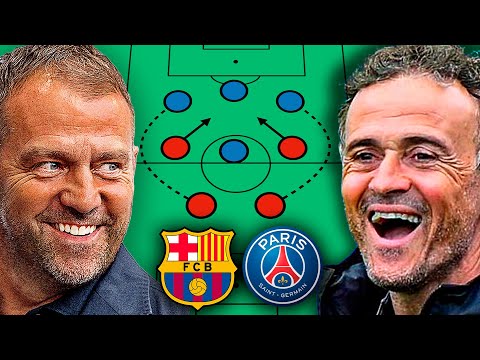
Vidéo YouTubeOn paper Barcelona plays in 4 2 3 1 however when they have the ball Raphinha tends to go inside with Balde creating the width on the left. PSG meanwhile would play in a 4 3 3. Both teams however use a back 3 when they have the ball. But this time it's Hakimi rreating width as the right back. Inigo Martinez would have a choice to make between picking false 9 Dembélé and Doué. If Balde goes for Doué, Hakimi would be free. PSG's back 3 when in possession would be Marquihos, Pacho and either mendes or Vintinha on the left. If Barcelona advance and close the lines between defense and midfield it's harder. So PSG's front 3 have to drop back. If Barca's front 3 press PSG's back 3, Vitinha would drop and allow Mendes to move forward meanwhile Neves and Ruiz would form the double pivot, attracting attention from more Barcelona players and leaving Mendes with more space. Barcelona would then have no choice but to reduce distance between their center backs and their fullbacks to be more compact. This way, a player like Kvara could be free out wide. A way to counter this for B arca would be man marking with Olmo going on Vitinha and Yamal following and tracking back against Mendes. That being said, PSG's attackers are good at exploiting space against high line teams as well. PSG's pressing would consist of PSG's front 3 being very agressive on Barcelona's back line and goalkeeper while Neves and Ruiz would mark Pedri and De Jong. Doué and Kvara could also make sure passes between Barca's center backs anf ullbacks wouldn't be made. The gk probably would have send long balls to Yamal and Raphinha for their speed.
.
il y a un an
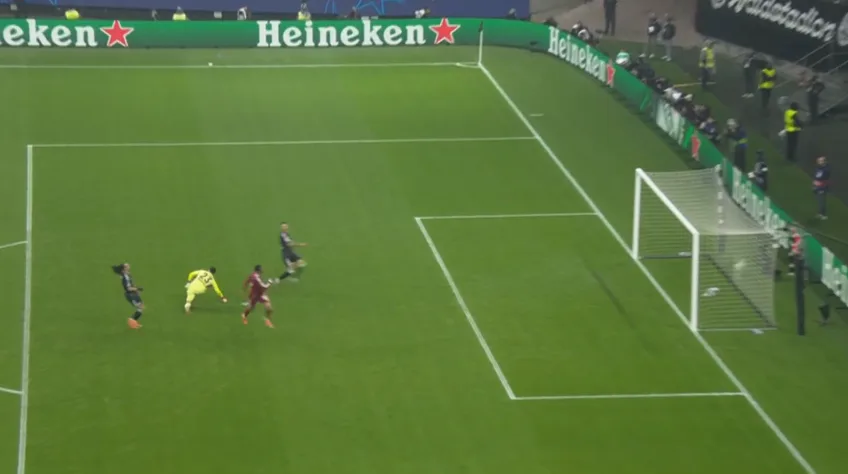
Ekitiké qui égalise pour Liverpool. La meilleure recrue de Liverpool cet été devant les surpayés Wirtz et Isak.


YouTube
Vidéo YouTubeIt requires perfect timing, positioning, collective understanding. 1mistake can lead to disaster. If successfull, the third man combination can be effective both during build up, in midfield, to penetrate defensive block. It was embedded into principles of Dutch total football where constant movements and playing one pass ahead were fundamental. Johann Cruyff later turned it into a coachable idea. Pep Guardiola is seen later as the man who fully formalized the third man as a core principle of positional play turning it from improvisation to a repeatable solution used to break passing lines. In the modern game it can be seeen almost everywhere. The third man is difficult to defend against because it exploits a fundamental weakness both in how teams defend and human psychology. 2 ways a player can mark another is to shadow mark him so block a direct passing lane by staying in front of the player or they can mark the player from behind. So by involving a third man it becomess easier to bypass this player and secondly, when a ball get played beyond a defender, instinctively they will turn to face the ball and will start running in that direction. In that split second the third player becomes an option, moving past the opponent in their blind spot and receiving the ball already facing the goal. The third man combination can be used during build up, in midfield and in the final third. During build up, it's easier to spot these combinations but also it's where it's the most dangerous to mess up. So you need to be as precise as possible which means there is less place for rceativity in this area. If every player is man marked, the goalkeeper is key to make the third man combination possible. If the gk is closed down, one of the most common used move is a pass to the holding midfielder who lays then into the free center back. If the pressure comes from the left of the gk, the holding midfielder needs to go for the left center back. If comes from the right then vice versa.
Third, this center back needs to be quick to give the team option. If he passesto the keeper then doesen't move up the pitch, then the holding midfielder doesn't have anyone to pass to. If the body positioning and the orientation of the pass is slightly off and it goes back into the opposite area where the opponent have more players ready to intercept, it can go wrong. Como under Fabregas do the third man combination quite well during build up. Roberto De Zerbi is also a pioneer of the third man combination. Marseille's holding midfielders try to stay as close of the first line of press as possible. It seems counter intuitive to mark yourself but once the keeper pass to the center back and the forward pressing goes to the center back, it can free gaps in behind for a holding midfielder to receive. If other players followed the holding midfielders it would create even bigger gaps further up the pitch. One solution against this third man combination from build up is an aggressive man marking system. But even in that situation it can be difficult to intercept. Direct long version of third man combination can be seen with long goal kicks. But unlike 20 / 30 years ago, these long balls are softer often to astriker dropping off the defensive line and finding a third man combination in the center. The striker must understand the right pocket of space to lay the ball off otherwise the opponen will regain possession. If successfull then the wingers are perfectly positioned to attack in b ehind the defensive line. In the midfield there are almost endless possibilities of third man combination. It depends on how thedefending team is doing. More zonal defensive systems will want to keep specific lines, the advantage being you can keep a slightly more aggressive shape and not concede too much room. Against a 4 4 2 for example. Midfield line will only drop so far before an offensive player is free to receive the ball. A defensiive line can't follow any player dropping off.
This is where systems like 3 2 5 can overload a defense. These pockets of space are perfect examples of third man target However these strict lines are not as common as they used to be a few seasons ago. A most common approach now is man oriented systems. You will have less space againsst them but you can also gain more control of the pitch, so you move straight into the final third. This is what we saw Man United doing against Arsenal in Premiere League in 2026 during the 2025 / 2026 season, not allowing them to find a player in the center and forcing Arsenal to go out wide even if that means Manchester United had to defend with a defensive line or 5 players if not by times 6 players. Pep Guardiola's Man City is designed nearly entirely on tight combinations in the center. With themoverloading the center with quality players, City will often look to go into Haaland who can knock it down between the lines into these 3 players. Or frequently, Manchester City will go directly into the midfielders who can turn and play a through ball in behind. Rather than going forward then backward they go directly by breaking the first line then instantly breaking the second with a third man running into the space behind the defense. One team that is excellent at breaking defensive lines is Inter Milan. Under Cristian Chivu, Inter are a more direct team compared to Inzaghi. The vast majority of attack start from a deep position. Because of their 3 5 2 shape there is often a lot of space on the flanks which they will use to play the wingbacks in behind. In fact Inter uses more of a fourth man. Perfect example of this is their fourth goal against Come during their 4 - 0 victory over them in 2025. They play the ball directly into midfield then look for a layoff into the center. From here there is space for Di Marco on the left flank to cross.
Then there is the final thid which is the trickiest one to get right. But here teams can also get more creative as losing possession here is less risky and also it's where the risk of losing possession is at its lowest. One pattern we often see is the run into the half space. Moving the ball out wide to a winger for example, it pulls the fullback over to the flank,f reeing a gap in behind for a player to run into. A difficult position to track and it often requires a midfielder to follow this movement. One of the best example of this is Barcelona, specifically on the right flank with Koundé and Yamal. Barcelona can also use this run not only tolead to a direct cut back into the box but they can use it as a decoy as well. For example a run in the half space will drag a defender out of position, freeing up a dangerous central channel for someone attacking the box. The objective of third man combination remains the same : manipulate the opponent's shape and strike where they aren't looking.
il y a un an
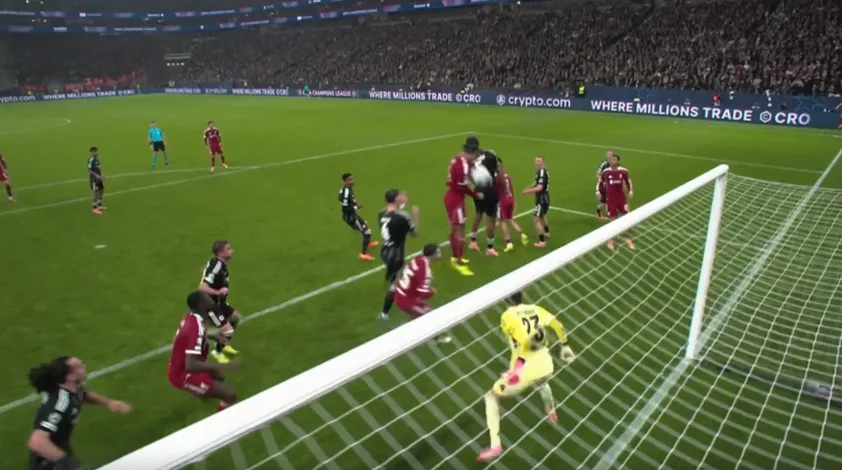
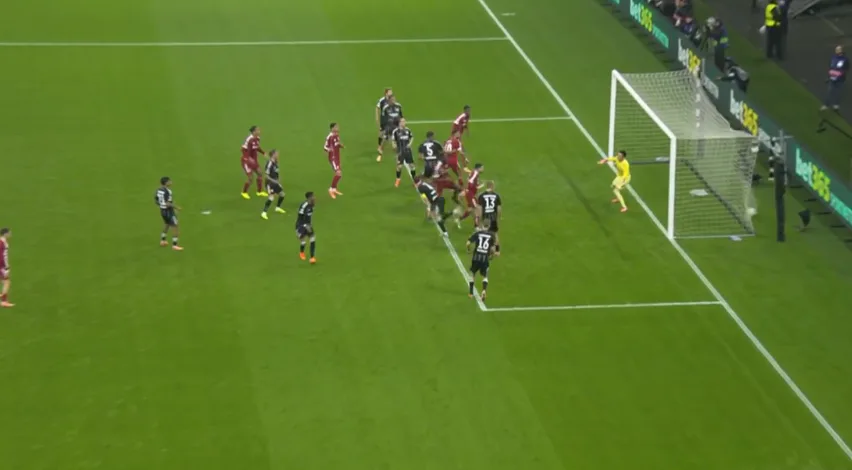
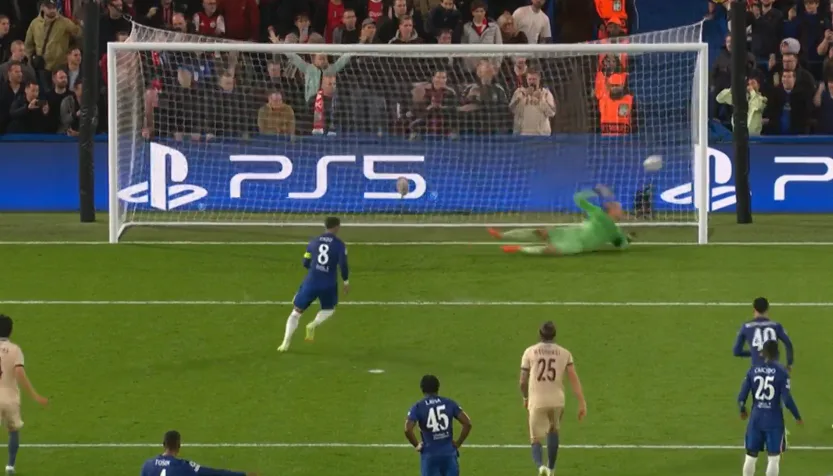
But de Chelsea sur penalty par Enzo Fernandez.
3 - 2 pour Chelsea face à un Ajax réduit à 10.
il y a un an