Sujet résolu
L'auteur a trouvé une solution à son problème.


Critique de "Human Accomplishment"
Méthodologie et Sélection :
Murray utilise une approche quantitative pour évaluer les contributions culturelles, ce qui peut être à la fois un point fort et une faiblesse. D'un côté, cela permet une certaine objectivité dans l'évaluation des réalisations. D'un autre côté, cette méthode peut négliger des contributions moins quantifiables, comme celles des mouvements artistiques ou des traditions orales, qui ne se prêtent pas facilement à une évaluation statistique.
Perspective Historique :
L'ouvrage se concentre principalement sur la tradition occidentale, ce qui peut donner l'impression d'une vision eurocentrique de l'accomplissement humain. Cela soulève des questions sur l'inclusivité et la diversité des contributions culturelles à l'échelle mondiale. Les réalisations d'autres civilisations, notamment celles d'Asie, d'Afrique et des Amériques, sont souvent sous-représentées.
Interprétation des Données :
Murray fait des généralisations sur les tendances culturelles et les périodes de créativité, ce qui peut parfois sembler réducteur. Par exemple, il attribue des périodes de grande créativité à des facteurs socio-économiques ou politiques, mais ces interprétations peuvent manquer de nuance et ignorer des dynamiques plus complexes.
Implications Philosophiques et Éthiques :
Le livre soulève des questions sur la nature de l'excellence et sur qui est considéré comme "accomplissant" dans le domaine des arts et des sciences. Cela peut mener à des discussions sur les biais culturels et les préjugés qui influencent notre perception de la valeur des contributions humaines.
Réception et Controverses :
"Human Accomplishment" a suscité des réactions variées, certains louant l'érudition de Murray et sa capacité à synthétiser des informations complexes, tandis que d'autres critiquent son approche et ses conclusions. Les débats autour de ses idées reflètent des tensions plus larges dans la société concernant la culture, l'identité et la valeur des contributions humaines.
En somme, "Human Accomplishment" est un ouvrage provocateur qui invite à réfléchir sur la nature de l'excellence et sur la manière dont nous valorisons les contributions culturelles. Cependant, sa méthodologie et ses choix de contenu soulèvent des questions importantes sur l'inclusivité et la diversité des réalisations humaines.
Vous êtes corda ou pas ?

Méthodologie et Sélection :
Murray utilise une approche quantitative pour évaluer les contributions culturelles, ce qui peut être à la fois un point fort et une faiblesse. D'un côté, cela permet une certaine objectivité dans l'évaluation des réalisations. D'un autre côté, cette méthode peut négliger des contributions moins quantifiables, comme celles des mouvements artistiques ou des traditions orales, qui ne se prêtent pas facilement à une évaluation statistique.
Perspective Historique :
L'ouvrage se concentre principalement sur la tradition occidentale, ce qui peut donner l'impression d'une vision eurocentrique de l'accomplissement humain. Cela soulève des questions sur l'inclusivité et la diversité des contributions culturelles à l'échelle mondiale. Les réalisations d'autres civilisations, notamment celles d'Asie, d'Afrique et des Amériques, sont souvent sous-représentées.
Interprétation des Données :
Murray fait des généralisations sur les tendances culturelles et les périodes de créativité, ce qui peut parfois sembler réducteur. Par exemple, il attribue des périodes de grande créativité à des facteurs socio-économiques ou politiques, mais ces interprétations peuvent manquer de nuance et ignorer des dynamiques plus complexes.
Implications Philosophiques et Éthiques :
Le livre soulève des questions sur la nature de l'excellence et sur qui est considéré comme "accomplissant" dans le domaine des arts et des sciences. Cela peut mener à des discussions sur les biais culturels et les préjugés qui influencent notre perception de la valeur des contributions humaines.
Réception et Controverses :
"Human Accomplishment" a suscité des réactions variées, certains louant l'érudition de Murray et sa capacité à synthétiser des informations complexes, tandis que d'autres critiquent son approche et ses conclusions. Les débats autour de ses idées reflètent des tensions plus larges dans la société concernant la culture, l'identité et la valeur des contributions humaines.
En somme, "Human Accomplishment" est un ouvrage provocateur qui invite à réfléchir sur la nature de l'excellence et sur la manière dont nous valorisons les contributions culturelles. Cependant, sa méthodologie et ses choix de contenu soulèvent des questions importantes sur l'inclusivité et la diversité des réalisations humaines.
Vous êtes corda ou pas ?
Un visage sincère et plein d'empathie est le vrai visage de la " force"
il y a 2 ans
Sponsorisé
Connectez-vous pour masquer les pubsHaving
spent 17 years in the marketing-data business, I love pointing out
better ways to crunch numbers. I can identify several weaknesses in
Murray’s methods. For example, since we don’t know the names of most
of the countless artists who worked on the great medieval cathedrals,
Murray can’t include them in his tables of great individuals and thus
he underrates the artistic accomplishments of the Middle Ages. Yet, to
my surprise, I can’t think of a single way to do it better than he
did.
Once
assembled, his “inventory” of 4,002 significant figures in 21
categories allowed him quantitatively to test some Big Questions. For
instance, did the pursuit of excellence flourish more in liberal
democracies than in non-despotic monarchies? Answer: no.
His
methods and lists should become the standards for future research. There
is little need to reinvent his wheels. If you want to rate other types
of famous people, such as soldiers, violinists, or chefs, you can just
follow his methodology. Conversely, if you want to explore questions
Murray skips over, such as the role of social class, educational level,
or left-handedness among the accomplished, you can just use his tables
of names as your starting points. …
Ben
Franklin drubs Thomas Jefferson in the race to be our nation’s
foremost Renaissance man. Franklin scores as a major figure in both
physics and technology, and a significant one in literature. Others who
qualified in three categories include Galileo, Leibniz, Huygens,
Archimedes, and Rousseau, who was not just a philosopher and novelist
but also a successful comic-opera composer. The top polymaths, showing
up as significant in four categories, were Descartes and, predictably,
Leonardo Da Vinci.
All
the rankings will inspire arguments, of course, but that’s one of the
book’s pleasures.
French
postmodernists will sneer at the very concept of objectively measuring
greatness, but their brittle amour propre will be secretly salved by
hearing that the most important city in Murray’s lists, by far, is
Paris. It was the workplace for 12 percent of the 4,002 significant
scientists and artists. Of course, you can’t construct interesting new
knowledge like this if you actually believe the boring old
deconstructionist dogmas.
France
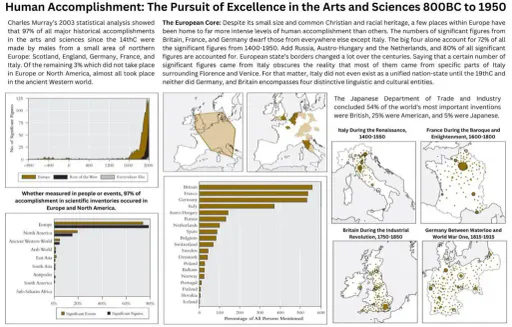
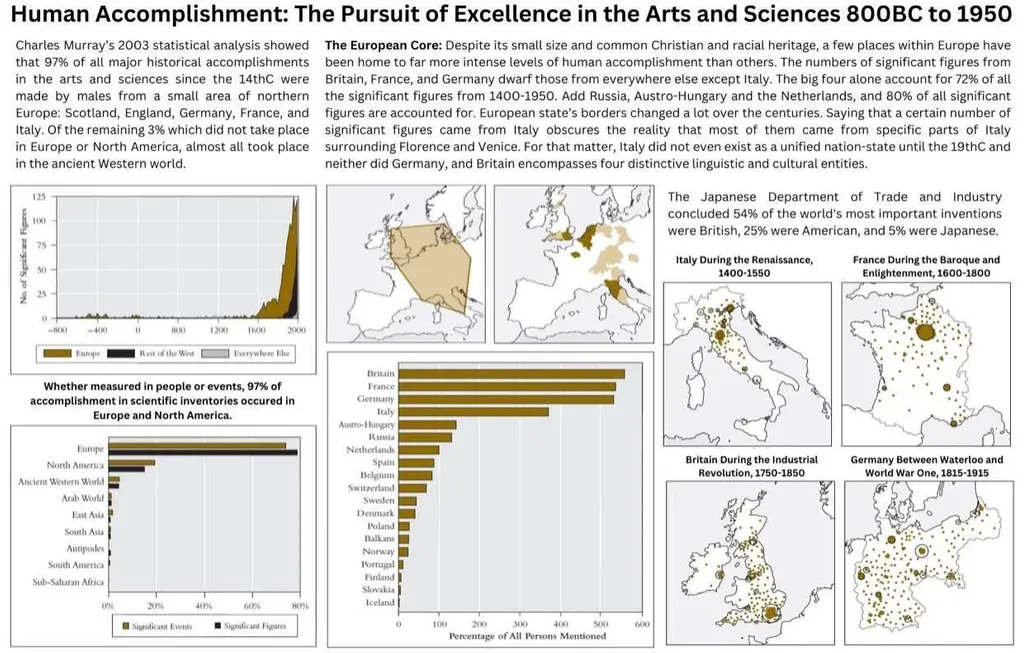
is tied with Britain and Germany as the leading nation, with Italy
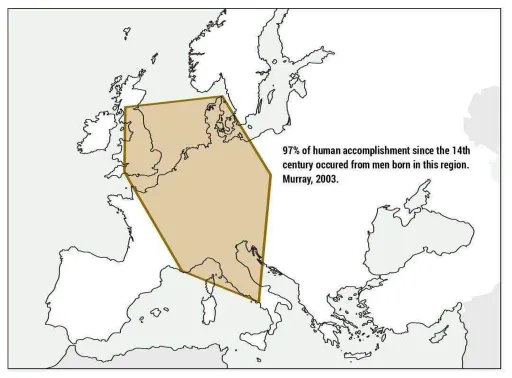
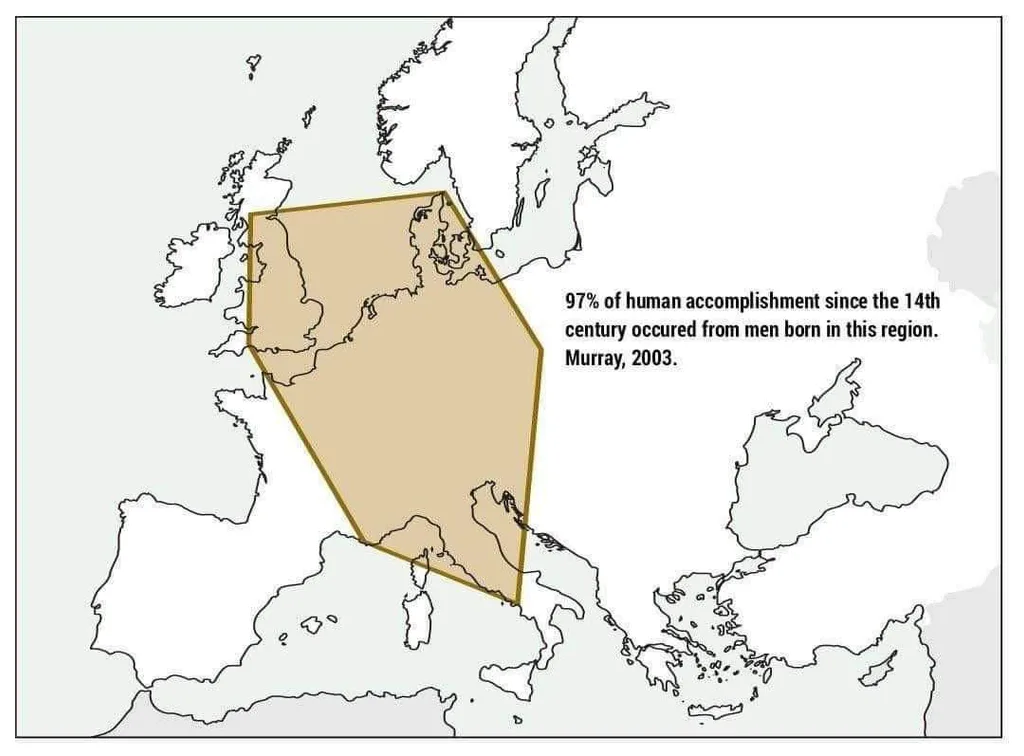
fourth. Interestingly, 80 percent of the significant Europeans grew up
in a rather narrow axis running from Naples up the Rhine to Edinburgh.
spent 17 years in the marketing-data business, I love pointing out
better ways to crunch numbers. I can identify several weaknesses in
Murray’s methods. For example, since we don’t know the names of most
of the countless artists who worked on the great medieval cathedrals,
Murray can’t include them in his tables of great individuals and thus
he underrates the artistic accomplishments of the Middle Ages. Yet, to
my surprise, I can’t think of a single way to do it better than he
did.
Once
assembled, his “inventory” of 4,002 significant figures in 21
categories allowed him quantitatively to test some Big Questions. For
instance, did the pursuit of excellence flourish more in liberal
democracies than in non-despotic monarchies? Answer: no.
His
methods and lists should become the standards for future research. There
is little need to reinvent his wheels. If you want to rate other types
of famous people, such as soldiers, violinists, or chefs, you can just
follow his methodology. Conversely, if you want to explore questions
Murray skips over, such as the role of social class, educational level,
or left-handedness among the accomplished, you can just use his tables
of names as your starting points. …
Ben
Franklin drubs Thomas Jefferson in the race to be our nation’s
foremost Renaissance man. Franklin scores as a major figure in both
physics and technology, and a significant one in literature. Others who
qualified in three categories include Galileo, Leibniz, Huygens,
Archimedes, and Rousseau, who was not just a philosopher and novelist
but also a successful comic-opera composer. The top polymaths, showing
up as significant in four categories, were Descartes and, predictably,
Leonardo Da Vinci.
All
the rankings will inspire arguments, of course, but that’s one of the
book’s pleasures.
French
postmodernists will sneer at the very concept of objectively measuring
greatness, but their brittle amour propre will be secretly salved by
hearing that the most important city in Murray’s lists, by far, is
Paris. It was the workplace for 12 percent of the 4,002 significant
scientists and artists. Of course, you can’t construct interesting new
knowledge like this if you actually believe the boring old
deconstructionist dogmas.
France
is tied with Britain and Germany as the leading nation, with Italy
fourth. Interestingly, 80 percent of the significant Europeans grew up
in a rather narrow axis running from Naples up the Rhine to Edinburgh.
Un visage sincère et plein d'empathie est le vrai visage de la " force"
il y a 2 ans


C'est le fameux livre où il dit que + de 95% des accomplissements humains significatifs sont fait en Europe de l'ouest ?

Stay Behind - GLADIO 🗡️
il y a 2 ans